

Comparison of robotic, conventional, and endoscopic nipple-sparing mastectomy with immediate prosthetic breast reconstruction for breast cancer: A systematic review and meta-analysis
Abstract
In this network meta-analysis (NMA), we aimed to evaluate the relative efficacy of robotic nipple-sparing mastectomy (RNSM), conventional nipple-sparing mastectomy (CNSM), and endoscope-assisted nipple-sparing mastectomy (ENSM), each combined with immediate prosthetic breast reconstruction (IPBR), for the treatment of breast cancer. Relevant studies published up to June 15, 2024, were identified through searches of PubMed, Embase, the Cochrane Library, and Web of Science. Data extracted from these studies were analyzed using Stata 15.1 and the Gemtc 1.0.1 package in R 4.2.3. A Bayesian framework and a Markov Chain Monte Carlo model were employed to conduct the NMA. Additionally, a ranking chart was generated to compare the advantages and disadvantages of the surgical methods. Ten studies met the inclusion criteria and were included in the NMA. The results indicated that ENSM with immediate implant-based reconstruction was associated with a smaller incision compared to CNSM. RNSM combined with IPBR was linked to a lower incidence of total complications, Grade 3 complications, and nipple-areola complex necrosis than CNSM. Furthermore, RNSM with IPBR demonstrated a lower recurrence rate than CNSM. However, CNSM with IPBR showed better outcomes in terms of surgical time, hospital stay, and positive margin infiltration. In contrast, RNSM and ENSM, both combined with IPBR, outperformed CNSM in terms of incision length, complication rates, and recurrence outcomes.
Keywords
Breast cancer robotic nipple-sparing mastectomy RNSM conventional / nipple-sparing mastectomy CNSM endoscope-assisted nipple-sparing mastectomy ENSM network meta-analysisFull text
Introduction
Breast cancer is one of the most common malignant diseases, with a high incidence rate [1]. In 2020 alone, approximately 2.3 million new cases and 685,000 related deaths were reported [2]. The risk factors for breast cancer are multifactorial and include age, obesity, alcohol consumption, hormonal and reproductive factors, as well as genetic predispositions [3–5]. Despite the availability of various treatments, the five-year survival rate for metastatic breast cancer remains below 30% [6]. Due to its high heterogeneity, breast cancer requires tailored treatment strategies based on molecular subtypes [7]. Advances in molecular technology have enabled the classification of breast cancer into four distinct subtypes, facilitating earlier diagnosis and improving patient prognosis [8].
Treatment options for breast cancer vary depending on the stage, with the ultimate goal of prolonging life [9]. In 1894, radical mastectomy was introduced to ensure complete removal of pathological tissue while minimizing the risk of recurrence or metastasis [10]. Since then, mastectomy techniques have evolved to better preserve the breast’s natural appearance while maintaining oncological safety [11]. This evolution led to the development of new surgical approaches, including the introduction of nipple-sparing mastectomy (NSM) in the 1980s. NSM aims to improve esthetic outcomes and patient satisfaction by preserving the skin and nipple-areola complex (NAC). It enables safe cancer removal with local recurrence rates comparable to those of traditional mastectomies, but with higher patient satisfaction [12]. When paired with immediate breast reconstruction, NSM may reduce recurrence and mortality rates, minimize scarring, and further enhance patient satisfaction [13]. However, conventional NSM (CNSM) can result in a large, visible scar on the breast and carries a high risk of NAC necrosis [14].
Currently, endoscopic-assisted NSM (ENSM) and robotic-assisted NSM (RNSM) are emerging as new treatment trends, offering improved cosmetic outcomes and high patient acceptance [15]. One study reported that RNSM is associated with higher patient satisfaction, less blood loss, longer surgical times, and higher medical costs compared to ENSM [16]. Another study found that, relative to CNSM, RNSM involves longer surgical times and greater expense but results in a lower incidence of grade 2–3 breast complications [17]. In recent years, the number of patients undergoing minimal access breast surgery (MABS) has increased. Compared to conventional breast surgery, MABS effectively reduces scar length and shortens operative time, and is widely accepted by patients [18]. However, not all CNSM procedures require long or visible incisions. Recently, the inframammary approach has gained traction in NSM, particularly for its potential to optimize both aesthetic and functional outcomes [19].
Network meta-analysis (NMA) is a statistical method used to compare the efficacy of different treatments, including those lacking direct comparisons [20, 21]. The core principle of meta-analysis is to statistically combine results from multiple independent studies on the same topic to draw a more robust conclusion. ENSM or RNSM offers esthetic benefits—such as a scar-free procedure and improved patient satisfaction—but these techniques are often associated with longer operative times and higher costs [15, 22]. Currently, few studies have directly compared the effectiveness of various NSM approaches combined with immediate breast reconstruction. Therefore, in this NMA, we aimed to evaluate the relative efficacy of RNSM, CNSM, and ENSM, each combined with immediate prosthetic breast reconstruction (IPBR) in the treatment of breast cancer.
Materials and methods
Search strategy
Our systematic review and meta-analysis was conducted according to the Preferred Reporting Items for Systematic Reviews and Meta-Analyses (PRISMA) guidelines [21, 23]. The protocol has been registered in the Open Science Framework (OSF) registry with the registration code osf.io/5j3dk. We searched for relevant articles up to June 15, 2024, in the Embase, PubMed, Web of Science, and Cochrane Library databases. All searches used medical subject headings and common keywords, including “Endoscopy,” “Endoscopic,” “Robotic,” “Robotics,” “Robot,” “Robots,” “Robotically,” “Breast,” “Mammary,” “Neoplasm,” “Neoplasms,” “Tumor,” “Tumors,” “Cancer,” “Cancers,” “Carcinoma,” “Carcinomas,” “Implantation,” “Implantations,” “Reconstruction,” “Reconstructions,” “Flap,” “Flaps,” “Reconstructive,” “Mammaplasty,” “Mammaplasties,” “Mammoplasty,” “Mammoplasties,” “Mastectomy,” “Mastectomies,” “Mammectomy,” “Mammectomies.” The key terms based on the PICOS search method are presented in Table 1 [24]. We did not limit the outcomes or study design in the search terms to avoid missing potentially relevant studies from our review. The detailed search syntax and the number of records retrieved from each database are shown in Table S1. The literature was imported into EndNote X20 and initially screened by reading the titles and abstracts. Subsequently, the full texts were reviewed to exclude studies that did not meet the inclusion criteria. The remaining studies were included in the final analysis.
| Category | Search terms |
|---|---|
| Population | “Breast Neoplasm” OR “Breast Tumor” OR “Breast Cancer” OR “Breast Carcinoma” |
| Intervention | Endoscopic-assisted nipple sparing mastectomy |
| Comparision | “Robotic-assisted nipple sparing mastectomy” OR “Conventional nipple sparing mastectomy” |
| Outcomes | Incision length (not limited in search terms) |
| Study design | Clinical trials and observational studies (not limited in search terms) |
Inclusion and exclusion criteria
The inclusion criteria for this study were as follows:
- Participants: Patients with breast cancer undergoing RNSM, CNSM, ENSM, and IPBR.
- Intervention: Studies on RNSM combined with immediate breast reconstruction, ENSM combined with immediate breast reconstruction, and traditional surgery combined with immediate breast reconstruction.
- Outcomes: (a) Incision length (cm); (b) Total operation time (min); (c) Blood loss (mL); (d) Hospital stay (days); (e) Overall complication rate and incidence of grade 3 complications (Clavien–Dindo classification), as well as specific complication rates; (f) Positive margin involvement, where cancer cells are found at the edge of the removed tumor tissue, indicating incomplete tumor removal and possible remaining cancer cells in the patient’s body; (g) Recurrence. type is clinical trial or observational study.
- Study type: Clinical trials or observational studies.
The exclusion criteria for this analysis included: animal studies; reviews, meta-analyses, case reports, conference abstracts, editorials, trial registrations, guidelines, books, and notes; studies with inconsistent themes; non-English publications; and retracted articles.
Data extraction
Initially, studies were screened according to the predefined inclusion and exclusion criteria. Data extracted from the eligible publications included the first author, publication year, study design, study duration, and sample size. Patient characteristics were also collected, such as age, body mass index (BMI), lymph node surgery, tumor size, tumor stage, and histopathological grade. Two researchers independently performed data extraction, and any discrepancies were resolved through consultation with a third researcher.
Literature quality assessment
Randomized controlled trials were assessed using the modified Jadad scale [25], which evaluates random sequence generation, allocation concealment, blinding, and reporting of dropouts and losses to follow-up. Studies scoring 1–3 points were considered low quality, while those scoring 4–7 points were classified as high quality. Cohort and case-control studies were evaluated using the Newcastle–Ottawa Scale (NOS) [26], which scores studies on a scale from 0–9 points: 0–3 points indicate low quality, 4–6 points medium quality, and 7–9 points high quality. Non-randomized controlled intervention studies were assessed using the Methodological Index for Non-Randomized Studies (MINORS) [27], which consists of 12 items with a maximum total score of 24 points.
Meta-analysis
This study performed a NMA using a Bayesian framework and a Markov Chain Monte Carlo (MCMC) model. The analysis was conducted with four chains, an initial burn-in of 20,000 iterations, followed by 50,000 sampling iterations, with a step size of one.
Statistical analysis
Data analysis was conducted using the Gemtc 1.0.1 package in R (version 4.2.3; R Foundation for Statistical Computing, Vienna, Austria) and Stata software (version 15.1; StataCorp, College Station, TX, USA). Heterogeneity was assessed using the I2 statistic [28]. Model consistency was evaluated by comparing the Deviance Information Criterion (DIC) values of the consistency and inconsistency models, with a smaller DIC indicating a better model fit. A DIC difference of less than five was considered indicative of acceptable model consistency [29]. For continuous outcomes, such as incision length, total operation time, blood loss, and hospital stay, weighted mean differences (WMDs) with 95% confidence intervals (CIs) were calculated [30]. For binary outcomes—including complication rate, positive margin involvement, and recurrence—relative risks (RRs) with 95% CIs were reported [24]. Forest plots were used to display both direct and indirect comparisons of RRs or WMDs with their respective 95% CIs. Additionally, a ranking plot was generated to visualize the comparative advantages and disadvantages of each surgical approach.
Results
Inclusion of literature
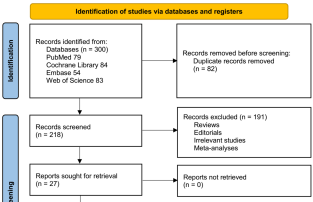
Based on the search strategy, a total of 8142 articles were initially retrieved. All records were imported into EndNote X20 for screening. After the removal of duplicates and exclusion of irrelevant titles and abstracts, 45 articles remained. Of these, 35 were excluded for not meeting the inclusion criteria, resulting in 10 studies being included in the final meta-analysis [16, 17, 31–38]. A detailed flowchart outlining the literature screening process is shown in Figure 1.
Quality evaluation
The meta-analysis included a total of 1525 patients, with 504 in the RNSM group, 771 in the CNSM group, and 250 in the ENSM group. Detailed baseline characteristics—including age, BMI, tumor size (cm), lymph node surgery, TNM stage, histopathological grade, and follow-up duration (months)—are summarized in Table 2. The quality assessment of the included studies is provided in Tables S2–S5. According to the NOS, the studies scored between six and eight points, indicating an overall moderate to high methodological quality.
| Country | Group | N | Age, year | BMI, kg/m2 | Tumor size (cm) | Lymph node surgery | TNM stage | Histopathologic grade | Follow-up, months | |
|---|---|---|---|---|---|---|---|---|---|---|
| Houvenaeghel, 2021 | France | RNSM | 87 | Mean, 47.8 | ≤24.9, 73; 25–29.9, 9; ≥30, 5 | NR | NR | NR | NR | 12 |
| CNSM | 142 | Mean, 52.7 | ≤24.9, 119; 25–29.9, 17; ≥30, 6 | NR | NR | NR | NR | 12 | ||
| Laia, 2020 | Taiwan, China | RNSM | 40 | 49 ± 10* | NR | 2.5 ± 2.5* | SLNB only, 31; SLNB then ALND, 7; ALND, 1; Not down, 1 | 0, 9; I, 11; IIa, 11; IIb, 6; IIIa, 2; IIIc, 1 | I, 8; II, 17; III, 6 | 13.5 ± 6.8* |
| ENSM | 91 | 49 ± 10* | NR | 2.2 ± 1.5* | SLNB only, 75; SLNB then ALND, 13; ALND, 1; Not down, 2 | 0, 28; I, 28; IIa, 23; IIb, 8; IIIa, 4; IIIc, 0 | I, 13; II, 54; III, 16 | 45.6 ± 25.5* | ||
| Laib, 2020 | Taiwan, China | RNSM | 54 | 48 ± 9.3* | NR | 2.5 ± 2.3* | SLNB only, 40; SLNB then ALND, 11; ALND, 2; Not down, 1 | 0, 8; I, 14; IIa, 16; IIb, 7; IIIa, 6 | I, 13; II, 25; III, 9 | 14.6 ± 8.8* |
| CNSM | 62 | 49 ± 11* | NR | 2.5 ± 1.6* | SLNB only, 37; SLNB then ALND, 12; ALND, 6; Not down, 7 | 0, 14; I, 15; IIa, 17; IIb, 7; IIIa, 2 | I, 8; II, 34; III, 11 | 47.3 ± 19.6* | ||
| Lai, 2024 | Taiwan, China | CNSM | 73 | 46.1 ± 8.0* | <18, 4; 18–24, 45; ≥24, 24 | NR | No, 9; SLNB only, 48; SLNB then ALND, 9; ALND, 7 | NR | NA, 16; I, 14; II, 34; III, 9 | 25.5 ± 8.5* |
| ENSM | 84 | 46.9 ± 8.3* | <18, 4; 18–24, 54; ≥24, 26 | NR | No, 5; SLNB only, 62; SLNB then ALND, 12; ALND, 5 | NR | NA, 9; I, 17; II, 36; III, 22 | 26.9 ± 6.9* | ||
| RNSM | 76 | 48.2 ± 9.5* | <18, 3; 18–24, 59; ≥24, 14 | NR | No, 13; SLNB only, 48; SLNB then ALND, 6; ALND, 9 | NR | NA, 16; I, 10; II, 33; III, 17 | 28.4 ± 8* | ||
| Lee, 2021 | Korea | ENSM | 20 | 47.2 ± 9.5* | 24.1 ± 3.8* | NR | ALND, 2 | 0, 10; Ia,3; IIa, 5; IIb, 1; IIIa, 1 | NR | NR |
| CNSM | 25 | 44.6 ± 9.6* | 22.3 ± 3.6* | NR | ALND, 4 | 0, 6; Ia, 11; IIa, 5; IIb, 2; IIIa, 1 | NR | NR | ||
| Moon, 2021 | Korea | RNSM | 40 | 46 ± 8* | 22.2 ± 3.5* | 1.6 ± 1.3 | SLNB only, 37; SLNB then ALND, 3 | NR | Grade I, 13; Grade II, 23; Grade III, 4 | NR |
| CNSM | 41 | 49 ± 10* | 23.9 ± 3.6* | 1.8 ± 1.1 | SLNB only, 36; SLNB then ALND, 5 | NR | Grade I, 10; Grade II, 21; Grade III, 9 | NR | ||
| Park, 2022 | Korea | RNSM | 167 | 45 (28–71)ˆ | <25, 152; ≥25, 15 | NR | NR | ≤Stage I, 111; >Stage I, 45; Benign, 11 | NR | 18 |
| CNSM | 334 | 44 (23–71)ˆ | <25, 294; ≥25, 40 | NR | NR | ≤Stage I, 227; >Stage I, 85; Benign, 22 | NR | |||
| Toesca, 2022 | Italy | CNSM | 40 | 45.5 (29–62)ˆ | Underweight, 8; Normal weight (18.5–24.9 kg/m2)ˆ, 32 | NR | NR | 0, 5; Ia, 15; IIa, 9; IIb, 6; IIIa, 0; IV, 0 | NR | 28.6 (range 3.7–43.3) |
| RNSM | 40 | 44.5 (30–60)ˆ | Underweight, 4; Normal weight (18.5–24.9 kg/m2)ˆ, 36 | NR | NR | 0, 7; Ia, 12; IIa, 9; IIb, 3; IIIa, 2; IV, 1 | NR | |||
| Wang, 2023 | China | ENSM | 38 | 42.00 (36.75–51.75)ˆ | 21.91 (19.98–24.10)ˆ | NR | NR | NR | NR | 51.5 |
| CNSM | 26 | 45.50 (39.00–59.00)ˆ | 25.57 (21.11–28.10)ˆ | NR | NR | NR | NR | |||
| Qiu, 2022 | China | ENSM | 17 | 35.9 ± 6.4* | 21.3 ± 1.3* | NR | SLNB, 12; ALND, 5 | NR | NR | NR |
| CNSM | 28 | 39.1 ± 7.7* | 22.3 ± 4.6* | NR | SLNB, 13; ALND, 15 | NR | NR | NR |
Note: *Mean ± SD; ˆMedian (Q1,Q3). NR: Non-reported; RNSM: Robotic nipple sparing mastectomy; CNSM: Conventional NSM; ENSM: Endoscopic-assisted NSM; SLNB: Sentinel lymph node biopsy; ALND: Axillary lymph node dissection; TNM: Tumor, Node, Metastasis.
Results of meta-analysis
Incision length (cm)
The connections between RNSM and CNSM, as well as between ENSM and CNSM, reflect a greater number of direct comparison studies involving CNSM, suggesting a larger sample size for this group (Figure 2A). The incision length was significantly shorter in the ENSM group compared to the CNSM group, with a WMD of −5.57 (95% CI: −10.74 to −0.69). No significant differences in incision length were observed between the other groups (Figure 2B). Overall, ENSM appeared to be the most favorable surgical approach in terms of minimizing incision length, followed by RNSM and then CNSM (Figure 2C).
Total operation time (min)
A greater number of studies with larger sample sizes compared RNSM and CNSM (Figure 3A). The total operation time was significantly longer in both the ENSM group (WMD: 63.4; 95% CI: 21.18–105.59) and the RNSM group (WMD: 61.22; 95% CI: 24.26–98.24) compared to the CNSM group (Figure 3B). Based on total operation time, CNSM emerged as the most favorable surgical approach, followed by RNSM (Figure 3C).
Blood loss (mL)
A greater number of studies with larger sample sizes were available for the direct comparison between RNSM and CNSM (Figure 4A). The forest plot revealed no significant differences in intraoperative blood loss among the groups (Figure 4B). However, based on the ranking analysis, RNSM appeared to be the most favorable approach for minimizing blood loss, followed by CNSM (Figure 4C).
Hospital stay (days)
As illustrated in Figure 5A, larger sample sizes were observed in the comparisons between RNSM and CNSM, as well as between ENSM and CNSM. However, the forest plot demonstrated no statistically significant differences in hospital stay duration among the groups (Figure 5B). Based on the ranking analysis in Figure 5C, CNSM appeared to be the most favorable approach for reducing hospital stay, followed by ENSM.
Complications
Overall, a greater number of studies with larger sample sizes were available for direct comparisons between RNSM and CNSM (Figure 6A, 6D, and 6G). Compared with CNSM, RNSM was associated with a significantly lower incidence of overall complications (WMD: 0.73; 95% CI: 0.61–0.88), grade 3 complications (WMD: 0.37; 95% CI: 0.20–0.62), and total NAC necrosis (WMD: 5.5e-09; 95% CI: 9.5e-21–0.058) (Figure 6B, 6E, and 6H). In the ranking analysis, RNSM had the lowest incidence of these complications, followed by ENSM, with CNSM showing the highest incidence (Figure 6C, 6G, and 6I). However, no significant differences were observed among the groups in other complications, including hematoma, infection, and implant loss (Figure S1).
Positive margin involvement
A substantial number of studies with large sample sizes were available for the direct comparison between RNSM and CNSM (Figure 7A). However, no statistically significant differences were observed between the groups regarding positive margin involvement (Figure 7B). Based on the ranking analysis, CNSM appeared to be the most favorable surgical approach for minimizing positive margin involvement (Figure 7C).
Recurrence
A substantial number of studies with large sample sizes were available for the direct comparison between RNSM and CNSM (Figure 8A). As shown in Figure 8B, the recurrence rate was significantly lower in the RNSM group compared to the CNSM group (WMD: 0.060; 95% CI: 0.0018–0.47). According to the ranking probability graph (Figure 8C), RNSM was associated with the lowest recurrence rate, followed by ENSM, while CNSM had the highest recurrence rate.
Discussion
Despite the increasing survival rates of patients with breast cancer following surgical treatment, a subset of patients continues to experience recurrence or metastasis [39–41]. In recent years, the clinical outcomes of RNSM and ENSM have been extensively studied. Both approaches have been shown to offer esthetic advantages, including scarless surgery and high patient satisfaction [42, 43]. However, the comparative efficacy of RNSM, CNSM, and ENSM when combined with IPBR remains uncertain. This NMA included 10 studies to evaluate the effectiveness of RNSM, CNSM, and ENSM combined with IPBR in the treatment of breast cancer. The risk of postoperative complications is influenced by both patient-related and surgery-related factors. While the mastectomy technique significantly impacts patient outcomes, the type of IPBR also plays a critical role. For example, submuscular IPBR is more commonly associated with postoperative pain, restricted shoulder mobility, and animation deformity, whereas prepectoral IPBR increases the risk of rippling. Among the included studies, Lai et al. [32] employed submuscular IPBR, Qiu et al. [36] primarily used submuscular IPBR but applied prepectoral IPBR in specific cases, and Moon et al. [34] utilized prepectoral IPBR. The remaining studies did not report the type of IPBR used [16, 17, 31, 33, 35, 37, 38]. As a result, a subgroup analysis based on IPBR technique was not feasible due to insufficient reporting. Of the 10 studies included, one originated from France [17], three from South Korea [33–35], one from Italy [37], and five from China [16, 31, 32, 36, 38]. Notably, European studies tended to be multicenter prospective cohorts, whereas studies from China and South Korea were predominantly single-center retrospective designs. This discrepancy may have led to an overestimation of the short-term benefits of RNSM, such as reduced hospital stay. Moreover, European research emphasized long-term survival outcomes, while Asian studies focused more on short-term efficacy, with limited reporting on long-term complications. Geographical differences and cultural practices may further contribute to technical variations in surgical procedures. Moving forward, international collaboration will be critical to harmonize evidence quality and address regional disparities. Such efforts are essential to support the global implementation of individualized treatment strategies for breast cancer.
Our meta-analysis found no statistically significant differences in clinical outcomes between RNSM and ENSM when combined with immediate implant-based breast reconstruction. The robotic surgical system has been shown to reduce the surgeon’s physical workload while enhancing procedural precision [35]. RNSM is increasingly favored due to its ability to facilitate more accurate and efficient breast tissue removal. It offers several advantages, including smaller incisions, reduced intraoperative bleeding, and a lower incidence of surgical complications—factors that contribute to improved postoperative quality of life [42]. Lee et al. [44] reported significantly lower rates of postoperative papillary necrosis and complications in the RNSM group compared to the CNSM group. Furthermore, RNSM combined with IPBR has been associated with a reduced risk of major necrosis [45]. In this NMA, RNSM with IPBR demonstrated superior outcomes compared to CNSM with IPBR, showing lower overall complication rates, fewer grade 3 complications, and a decreased incidence of total NAC necrosis. Additionally, the recurrence rate was lower in the RNSM + IPBR group than in the CNSM + IPBR group.
RNSM represents a novel surgical strategy for patients with breast cancer and has been associated with low perioperative morbidity, enhanced cosmetic outcomes, and better preservation of nipple sensitivity [46]. It has been widely reported as an effective and safe option for both treatment and prevention [47–49]. ENSM, as a minimally invasive approach, also provides favorable cosmetic results, inconspicuous scarring, and high levels of patient satisfaction [50]. A previous study demonstrated that both RNSM and ENSM were associated with improved wound healing compared to CNSM, albeit with higher associated costs [32]. Our findings showed that ENSM combined with IPBR resulted in significantly shorter incisions than CNSM. Furthermore, both RNSM and ENSM, when combined with IPBR, were superior to CNSM in terms of surgical incision length, complication rates, and recurrence outcomes—with RNSM + IPBR showing the most favorable results overall. However, CNSM combined with IPBR remained superior to both RNSM and ENSM approaches with respect to total operation time, length of hospital stay, and the incidence of positive margin involvement.
Several previous meta-analyses have evaluated the efficacy of RNSM compared to CNSM or ENSM in the surgical treatment of breast cancer. For instance, one meta-analysis comparing RNSM and CNSM reported that RNSM was associated with significantly longer operative times, a lower rate of necrosis, and fewer overall complications [51]. Another meta-analysis found no significant difference in complication rates between NSM and RNSM, suggesting that RNSM is a safe surgical option for patients undergoing mastectomy [52]. Additional studies have confirmed the feasibility of RNSM and its acceptable short-term efficacy [53]. Compared to CNSM, minimally invasive NSM techniques—such as RNSM and ENSM—are associated with longer operative and hospitalization times, but they offer benefits including reduced intraoperative blood loss, a lower incidence of complications and nipple necrosis, and significantly improved patient satisfaction [54]. These findings align with the results of the present study. Nonetheless, due to the higher costs and extended surgical duration associated with RNSM, its use may be best reserved for selected cases in which its advantages are most likely to yield substantial clinical benefit.
This meta-analysis presents several notable strengths. First, a comprehensive and systematic literature search strategy was employed to minimize the risk of publication bias. Second, the use of Bayesian statistical methods enabled the ranking of all included interventions, offering more precise and robust comparative estimates. Lastly, to the best of our knowledge, this is the first study to systematically evaluate and compare the clinical outcomes of different NSM techniques (CNSM, RNSM, and ENSM) when combined with IPBR.
Despite its strengths, this study has several limitations. First, some of the included studies had small sample sizes, which may have affected the robustness and stability of the results. Second, due to the limited number of available studies, subgroup analyses exploring the influence of different treatment strategies on clinical outcomes could not be conducted. Third, the absence of consistent reporting on outcome timing prevented stratification by specific follow-up periods. Therefore, while the findings highlight the potential advantages of RNSM and ENSM, further large-scale, independent studies with standardized reporting and long-term follow-up are necessary to validate and strengthen the conclusions of this meta-analysis.
Conclusion
In summary, this NMA suggests that RNSM and ENSM combined with IPBR offer superior outcomes compared to CNSM combined with IPBR, particularly in terms of shorter surgical incisions, reduced complication rates, and lower recurrence. Overall, RNSM and ENSM combined with IPBR demonstrate greater efficacy and safety than conventional approaches. Nevertheless, high-quality randomized controlled trials are necessary to confirm and further substantiate these findings.
Supplemental data
Supplemental data are available at the following link: https://www.bjbms.org/ojs/index.php/bjbms/article/view/11687/3840.
References
- Farkas AH, Nattinger AB. Breast cancer screening and prevention. Ann Intern Med 2023;176(11):Itc161–76. https://doi.org/10.7326/aitc202311210
- Arnold M, Morgan E, Rumgay H, Mafra A, Singh D, Laversanne M, et al. Current and future burden of breast cancer: global statistics for 2020 and 2040. Breast 2022;66:15–23. https://doi.org/10.1016/j.breast.2022.08.010
- Wilkinson L, Gathani T. Understanding breast cancer as a global health concern. Br J Radiol 2022;95(1130):20211033. https://doi.org/10.1259/bjr.20211033
- Hoxha I, Sadiku F, Hoxha L, Nasim M, Christine Buteau MA, Grezda K, et al. Breast cancer and lifestyle factors: umbrella review. Hematol Oncol Clin North Am 2024;38(1):137–70. https://doi.org/10.1016/j.hoc.2023.07.005
- Hanusek K, Karczmarski J, Litwiniuk A, Urbańska K, Ambrozkiewicz F, Kwiatkowski A, et al. Obesity as a risk factor for breast cancer—the role of miRNA. Int J Mol Sci 2022;23(24):15683. https://doi.org/10.3390/ijms232415683
- Riggio AI, Varley KE, Welm AL. The lingering mysteries of metastatic recurrence in breast cancer. Br J Cancer 2021;124(1):13–26. https://doi.org/10.1038/s41416-020-01161-4
- Kashyap D, Pal D, Sharma R, Garg VK, Goel N, Koundal D, et al. Global increase in breast cancer incidence: risk factors and preventive measures. Biomed Res Int 2022;2022:9605439. https://doi.org/10.1155/2022/9605439
- Roy M, Fowler AM, Ulaner GA, Mahajan A. Molecular classification of breast cancer. PET Clin 2023;18(4):441–58. https://doi.org/10.1016/j.cpet.2023.04.002
- Trayes KP, Cokenakes SEH. Breast cancer treatment. Am Fam Phys 2021;104(2):171–8.
- Freeman MD, Gopman JM, Salzberg CA. The evolution of mastectomy surgical technique: from mutilation to medicine. Gland Surg 2018;7(3):308–15. https://doi.org/10.21037/gs.2017.09.07
- Goethals A, Menon G, Rose J. Mastectomy. Treasure Island (FL): StatPearls Publishing LLC; 2025.
- Parks L. Nipple-sparing mastectomy in breast cancer: impact on surgical resection, oncologic safety, and psychological well-being. J Adv Pract Oncol 2021;12(5):499–506. https://doi.org/10.6004/jadpro.2021.12.5.5
- Kerr AJ, Dodwell D, McGale P, Holt F, Duane F, Mannu G, et al. Adjuvant and neoadjuvant breast cancer treatments: a systematic review of their effects on mortality. Cancer Treat Rev 2022;105:102375. https://doi.org/10.1016/j.ctrv.2022.102375
- Kim JH, Ryu JM, Bae SJ, Ko BS, Choi JE, Kim KS, et al. Minimal access vs conventional nipple-sparing mastectomy. JAMA Surg 2024;159(10):1177–86. https://doi.org/10.1001/jamasurg.2024.2977
- Zhang S, Xie Y, Liang F, Wang Y, Lv Q, Du Z. Endoscopic-assisted nipple-sparing mastectomy with direct-to-implant subpectoral breast reconstruction in the management of breast cancer. Plast Reconstr Surg Glob Open 2021;9(12):e3978. https://doi.org/10.1097/gox.0000000000003978
- Lai HW, Chen ST, Tai CM, Lin SL, Lin YJ, Huang RH, et al. Robotic- versus endoscopic-assisted nipple-sparing mastectomy with immediate prosthesis breast reconstruction in the management of breast cancer: a case-control comparison study with analysis of clinical outcomes, learning curve, patient-reported aesthetic results, and medical cost. Ann Surg Oncol 2020;27(7):2255–68. https://doi.org/10.1245/s10434-020-08223-0
- Houvenaeghel G, Barrou J, Jauffret C, Rua S, Sabiani L, Van Troy A, et al. Robotic versus conventional nipple-sparing mastectomy with immediate breast reconstruction. Front Oncol 2021;11:637049. https://doi.org/10.3389/fonc.2021.637049
- Lai HW, Chen ST, Lin YJ, Lin SL, Lin CM, Chen DR, et al. Minimal access (endoscopic and robotic) breast surgery in the surgical treatment of early breast cancer-trend and clinical outcome from a single-surgeon experience over 10 years. Front Oncol 2021;11:739144. https://doi.org/10.3389/fonc.2021.739144
- Kaciulyte J, Sordi S, Luridiana G, Marcasciano M, Torto FL, Cavalieri E, et al. The harmony of proportions: exploring the golden ratio concept in nipple-sparing mastectomy through inframammary fold incision. Il Giornale di Chirurgia-J Ital Surg Assoc 2024;44(6):e61. https://doi.org/10.1097/IA9.0000000000000061
- Mbuagbaw L, Rochwerg B, Jaeschke R, Heels-Andsell D, Alhazzani W, Thabane L, et al. Approaches to interpreting and choosing the best treatments in network meta-analyses. Syst Rev 2017;6(1):79. https://doi.org/10.1186/s13643-017-0473-z
- Mills EJ, Thorlund K, Ioannidis JP. Demystifying trial networks and network meta-analysis. BMJ 2013;346:f2914. https://doi.org/10.1136/bmj.f2914
- Burns HR, McCarter JH, King BW, Yu JZ, Hwang RF. Robotic-assisted nipple sparing mastectomy. Semin Plast Surg 2023;37(3):176–83. https://doi.org/10.1055/s-0043-1771047
- Page MJ, McKenzie JE, Bossuyt PM, Boutron I, Hoffmann TC, Mulrow CD, et al. The PRISMA 2020 statement: an updated guideline for reporting systematic reviews. BMJ 2021;372:n71. https://doi.org/10.1136/bmj.n71
- Cui S, Xu D, Xiong H, Zhuang Y, He Z. Stress-induced hyperglycemia and mortality in patients with traumatic brain injury without preexisting diabetes: a meta-analysis. Biomol Biomed 2025;25(2):291–303. https://doi.org/10.17305/bb.2024.10865
- Wang W, Long F, Wu X, Li S, Lin J. Clinical efficacy of mechanical traction as physical therapy for lumbar disc herniation: a meta-analysis. Comput Math Methods Med 2022;2022:5670303. https://doi.org/10.1155/2022/5670303
- Zhu Y, Wang C. Serum pentraxin-3 in patients with chronic obstructive pulmonary disease: a meta-analysis. Biomol Biomed 2024;24(6):1535–45. https://doi.org/10.17305/bb.2024.10875
- Lederhuber H, Massey LH, Kantola VE, Siddiqui MRS, Sayers AE, McDermott FD, et al. Clinical management of high-output stoma: a systematic literature review and meta-analysis. Tech Coloproctol 2023;27(12):1139–54. https://doi.org/10.1007/s10151-023-02830-1
- Xie Y, Quan X, Yang X. Raised levels of chemerin in women with preeclampsia: a meta-analysis. Biomol Biomed 2024;24(3):454–64. https://doi.org/10.17305/bb.2023.9671
- Ye N, Wei C, Deng J, Wang Y, Xie H. Preoxygenation strategies before intubation in patients with acute hypoxic respiratory failure: a network meta-analysis. Front Med (Lausanne) 2025;12:1532911. https://doi.org/10.3389/fmed.2025.1532911
- Ashtary-Larky D, Bagheri R, Tinsley GM, Asbaghi O, Paoli A, Moro T. Effects of intermittent fasting combined with resistance training on body composition: a systematic review and meta-analysis. Physiol Behav 2021;237:113453. https://doi.org/10.1016/j.physbeh.2021.113453
- Lai HW, Chen ST, Mok CW, Lin YJ, Wu HK, Lin SL, et al. Robotic versus conventional nipple sparing mastectomy and immediate gel implant breast reconstruction in the management of breast cancer—a case control comparison study with analysis of clinical outcome, medical cost, and patient-reported cosmetic results. J Plast Reconstr Aesthet Surg 2020;73(8):1514–25. https://doi.org/10.1016/j.bjps.2020.02.021
- Lai HW, Chen DR, Liu LC, Chen ST, Kuo YL, Lin SL, et al. Robotic versus conventional or endoscopic-assisted nipple-sparing mastectomy and immediate prosthesis breast reconstruction in the management of breast cancer: a prospectively designed multicenter trial comparing clinical outcomes, medical cost, and patient-reported outcomes (RCENSM-P). Ann Surg 2024;279(1):138–46. https://doi.org/10.1097/sla.0000000000005924
- Lee HY, Chang YW, Yu DY, Lee TY, Kim DW, Kim WY, et al. Comparison of single incision endoscopic nipple-sparing mastectomy and conventional nipple-sparing mastectomy for breast cancer based on initial experience. J Breast Cancer 2021;24(2):196–205. https://doi.org/10.4048/jbc.2021.24.e18
- Moon J, Lee J, Lee DW, Lee HS, Nam DJ, Kim MJ, et al. Postoperative pain assessment of robotic nipple-sparing mastectomy with immediate prepectoral prosthesis breast reconstruction: a comparison with conventional nipple-sparing mastectomy. Int J Med Sci 2021;18(11):2409–16. https://doi.org/10.7150/ijms.56997
- Park HS, Lee J, Lai HW, Park JM, Ryu JM, Lee JE, et al. Surgical and oncologic outcomes of robotic and conventional nipple-sparing mastectomy with immediate reconstruction: international multicenter pooled data analysis. Ann Surg Oncol 2022;29(11):6646–57. https://doi.org/10.1245/s10434-022-11865-x
- Qiu J, Wen N, Xie Y, Feng Y, Liang F, Lv Q, et al. Novel technique for endoscopic-assisted nipple-sparing mastectomy and immediate breast reconstruction with endoscopic-assisted latissimus dorsi muscle flap harvest through a single axillary incision: a retrospective cohort study of comparing endoscopic and open surgery. Gland Surg 2022;11(8):1383–94. https://doi.org/10.21037/gs-22-398
- Toesca A, Sangalli C, Maisonneuve P, Massari G, Girardi A, Baker JL, et al. A randomized trial of robotic mastectomy versus open surgery in women with breast cancer or BrCA mutation. Ann Surg 2022;276(1):11–9. https://doi.org/10.1097/sla.0000000000004969
- Wang ZH, Gao GX, Liu WH, Wu SS, Xie F, Xu W, et al. Single-port nipple-sparing subcutaneous mastectomy with immediate prosthetic breast reconstruction for breast cancer. Surg Endosc 2023;37(5):3842–51. https://doi.org/10.1007/s00464-023-09862-6
- Grasset EM, Dunworth M, Sharma G, Loth M, Tandurella J, Cimino-Mathews A, et al. Triple-negative breast cancer metastasis involves complex epithelial-mesenchymal transition dynamics and requires vimentin. Sci Transl Med 2022;14(656):eabn7571. https://doi.org/10.1126/scitranslmed.abn7571
- Herzog SK, Fuqua SAW. ESR1 mutations and therapeutic resistance in metastatic breast cancer: progress and remaining challenges. Br J Cancer 2022;126(2):174–86. https://doi.org/10.1038/s41416-021-01564-x
- Song Y, Barry WT, Seah DS, Tung NM, Garber JE, Lin NU. Patterns of recurrence and metastasis in BRCA1/BRCA2-associated breast cancers. Cancer 2020;126(2):271–80. https://doi.org/10.1002/cncr.32540
- Kim JH, Toesca A, Pozzi G, Gazzetta G, Marrazzo E, Park HS. Controversies and strengths of robot-assisted mastectomy. Eur J Cancer Prev 2023;32(4):388–90. https://doi.org/10.1097/cej.0000000000000812
- Shin H. Current trends in and indications for endoscopy-assisted breast surgery for breast cancer. Adv Exp Med Biol 2021;1187:567–90. https://doi.org/10.1007/978-981-32-9620-6/_30
- Lee J, Park HS, Lee H, Lee DW, Song SY, Lew DH, et al. Post-operative complications and nipple necrosis rates between conventional and robotic nipple-sparing mastectomy. Front Oncol 2020;10:594388. https://doi.org/10.3389/fonc.2020.594388
- Sanson C, Roulot A, Honart JF, Rimareix F, Leymarie N, Sarfati B. Robotic prophylactic nipple-sparing mastectomy with immediate prosthetic breast reconstruction: a prospective study of 138 procedures. Chirurgia (Bucur) 2021;116(2):135–42. https://doi.org/10.21614/chirurgia.116.2.135
- Park KU, Cha C, Pozzi G, Kang YJ, Gregorc V, Sapino A, et al. Robot-assisted nipple sparing mastectomy: recent advancements and ongoing controversies. Curr Breast Cancer Rep 2023;15(2):127–34. https://doi.org/10.1007/s12609-023-00487-1
- Ryu JM, Lee J, Lee J, Ko B, Kim JH, Shin H, et al. Mastectomy with reconstruction including robotic endoscopic surgery (MARRES): a prospective cohort study of the Korea robot-endoscopy minimal access breast surgery study group (KoREa-BSG) and Korean breast cancer study group (KBCSG). BMC Cancer 2023;23(1):571. https://doi.org/10.1186/s12885-023-10978-0
- Park KU, Tozbikian GH, Ferry D, Tsung A, Chetta M, Schulz S, et al. Residual breast tissue after robot-assisted nipple sparing mastectomy. Breast 2021;55:25–9. https://doi.org/10.1016/j.breast.2020.11.022
- Wu WP, Lai HW, Liao CY, Lin J, Huang HI, Chen ST, et al. Use of magnetic resonance imaging for evaluating residual breast tissue after robotic-assisted nipple-sparing mastectomy in women with early breast cancer. Korean J Radiol 2023;24(7):640–6. https://doi.org/10.3348/kjr.2022.0708
- Takemoto N, Koyanagi A, Yamamoto H. Ten-year follow up of cosmetic outcome, overall survival, and disease-free survival in endoscope-assisted partial mastectomy with filling of dead space using absorbable mesh for stage ≤ IIA breast cancer: comparison with conventional conservative method. BMC Womens Health 2021;21(1):253. https://doi.org/10.1186/s12905-021-01399-x
- De la Cruz-Ku G, Chambergo-Michilot D, Perez A, Valcarcel B, Pamen L, Linshaw D, et al. Outcomes of robotic nipple-sparing mastectomy versus conventional nipple-sparing mastectomy in women with breast cancer: a systematic review and meta-analysis. J Robot Surg 2023;17(4):1493–509. https://doi.org/10.1007/s11701-023-01547-5
- Filipe MD, de Bock E, Postma EL, Bastian OW, Schellekens PPA, Vriens MR, et al. Robotic nipple-sparing mastectomy complication rate compared to traditional nipple-sparing mastectomy: a systematic review and meta-analysis. J Robot Surg 2022;16(2):265–72. https://doi.org/10.1007/s11701-021-01265-w
- Angarita FA, Castelo M, Englesakis M, McCready DR, Cil TD. Robot-assisted nipple-sparing mastectomy: systematic review. Br J Surg 2020;107(12):1580–94. https://doi.org/10.1002/bjs.11837
- Xu X, Gao X, Pan C, Hou J, Zhang L, Lin S. Postoperative outcomes of minimally invasive versus conventional nipple-sparing mastectomy with prosthesis breast reconstruction in breast cancer: a meta-analysis. J Robot Surg 2024;18(1):274. https://doi.org/10.1007/s11701-024-02030-5
About this article
Correspondence
*Correspondence to Yufeng Zhang: [email protected]
Article history
Received: 2024-11-15 · Rev-recd: 2025-04-21 · Accepted: 2025-03-29
Data Availability
Data can be obtained from corresponding authors.
Conflicts of interest
Conflicts of interest: Authors declare no conflicts of interest.
Funding
Funding: Authors received no specific funding for this work.
Copyright
© 2025 An et al.
Downloads
References
Farkas AH, Nattinger AB. Breast cancer screening and prevention. Ann Intern Med. 2023;176(11):Itc161-76. doi:10.7326/aitc202311210 DOI: https://doi.org/10.7326/AITC202311210
Arnold M, Morgan E, Rumgay H, Mafra A, Singh D, Laversanne M, et al. Current and future burden of breast cancer: global statistics for 2020 and 2040. Breast. 2022;66:15-23. doi:10.1016/j.breast.2022.08.010 DOI: https://doi.org/10.1016/j.breast.2022.08.010
Wilkinson L, Gathani T. Understanding breast cancer as a global health concern. Br J Radiol. 2022;95(1130):20211033. doi:10.1259/bjr.20211033 DOI: https://doi.org/10.1259/bjr.20211033
Hoxha I, Sadiku F, Hoxha L, Nasim M, Christine Buteau MA, Grezda K, et al. Breast cancer and lifestyle factors: umbrella review. Hematol Oncol Clin North Am. 2024;38(1):137-70. doi:10.1016/j.hoc.2023.07.005 DOI: https://doi.org/10.1016/j.hoc.2023.07.005
Hanusek K, Karczmarski J, Litwiniuk A, Urbańska K, Ambrozkiewicz F, Kwiatkowski A, et al. Obesity as a risk factor for breast cancer—the role of miRNA. Int J Mol Sci. 2022;23(24):15683. doi:10.3390/ijms232415683 DOI: https://doi.org/10.3390/ijms232415683
Riggio AI, Varley KE, Welm AL. The lingering mysteries of metastatic recurrence in breast cancer. Br J Cancer. 2021;124(1):13-26. doi:10.1038/s41416-020-01161-4 DOI: https://doi.org/10.1038/s41416-020-01161-4
Kashyap D, Pal D, Sharma R, Garg VK, Goel N, Koundal D, et al. Global increase in breast cancer incidence: risk factors and preventive measures. Biomed Res Int. 2022;2022:9605439. doi:10.1155/2022/9605439 DOI: https://doi.org/10.1155/2022/9605439
Roy M, Fowler AM, Ulaner GA, Mahajan A. Molecular classification of breast cancer. PET Clin. 2023;18(4):441-58. doi:10.1016/j.cpet.2023.04.002 DOI: https://doi.org/10.1016/j.cpet.2023.04.002
Trayes KP, Cokenakes SEH. Breast cancer treatment. Am Fam Phys. 2021;104(2):171-8.
Freeman MD, Gopman JM, Salzberg CA. The evolution of mastectomy surgical technique: from mutilation to medicine. Gland Surg. 2018;7(3):308-15. doi:10.21037/gs.2017.09.07 DOI: https://doi.org/10.21037/gs.2017.09.07
Goethals A, Menon G, Rose J. Mastectomy. Treasure Island (FL): StatPearls Publishing LLC;. 2025.
Parks L. Nipple-sparing mastectomy in breast cancer: impact on surgical resection, oncologic safety, and psychological well-being. J Adv Pract Oncol. 2021;12(5):499-506. doi:10.6004/jadpro.2021.12.5.5 DOI: https://doi.org/10.6004/jadpro.2021.12.5.5
Kerr AJ, Dodwell D, McGale P, Holt F, Duane F, Mannu G, et al. Adjuvant and neoadjuvant breast cancer treatments: a systematic review of their effects on mortality. Cancer Treat Rev. 2022;105:102375. doi:10.1016/j.ctrv.2022.102375 DOI: https://doi.org/10.1016/j.ctrv.2022.102375
Kim JH, Ryu JM, Bae SJ, Ko BS, Choi JE, Kim KS, et al. Minimal access vs conventional nipple-sparing mastectomy. JAMA Surg. 2024;159(10):1177-86. doi:10.1001/jamasurg.2024.2977 DOI: https://doi.org/10.1001/jamasurg.2024.2977
Zhang S, Xie Y, Liang F, Wang Y, Lv Q, Du Z. Endoscopic-assisted nipple-sparing mastectomy with direct-to-implant subpectoral breast reconstruction in the management of breast cancer. Plast Reconstr Surg Glob Open. 2021;9(12):e3978. doi:10.1097/gox.0000000000003978 DOI: https://doi.org/10.1097/GOX.0000000000003978
Lai HW, Chen ST, Tai CM, Lin SL, Lin YJ, Huang RH, et al. Robotic- versus endoscopic-assisted nipple-sparing mastectomy with immediate prosthesis breast reconstruction in the management of breast cancer: a case-control comparison study with analysis of clinical outcomes, learning curve, patient-reported aesthetic results, and medical cost. Ann Surg Oncol. 2020;27(7):2255-68. doi:10.1245/s10434-020-08223-0 DOI: https://doi.org/10.1245/s10434-020-08223-0
Houvenaeghel G, Barrou J, Jauffret C, Rua S, Sabiani L, Van Troy A, et al. Robotic versus conventional nipple-sparing mastectomy with immediate breast reconstruction. Front Oncol. 2021;11:637049. doi:10.3389/fonc.2021.637049 DOI: https://doi.org/10.3389/fonc.2021.637049
Lai HW, Chen ST, Lin YJ, Lin SL, Lin CM, Chen DR, et al. Minimal access (endoscopic and robotic) breast surgery in the surgical treatment of early breast cancer-trend and clinical outcome from a single-surgeon experience over 10 years. Front Oncol. 2021;11:739144. doi:10.3389/fonc.2021.739144 DOI: https://doi.org/10.3389/fonc.2021.739144
Kaciulyte J, Sordi S, Luridiana G, Marcasciano M, Torto FL, Cavalieri E, et al. The harmony of proportions: exploring the golden ratio concept in nipple-sparing mastectomy through inframammary fold incision. Il Giornale di Chirurgia-J Ital Surg Assoc. 2024;44(6):e61. doi:10.1097/IA9.0000000000000061 DOI: https://doi.org/10.1097/IA9.0000000000000061
Mbuagbaw L, Rochwerg B, Jaeschke R, Heels-Andsell D, Alhazzani W, Thabane L, et al. Approaches to interpreting and choosing the best treatments in network meta-analyses. Syst Rev. 2017;6(1):79. doi:10.1186/s13643-017-0473-z DOI: https://doi.org/10.1186/s13643-017-0473-z
Mills EJ, Thorlund K, Ioannidis JP. Demystifying trial networks and network meta-analysis. BMJ. 2013;346:f2914. doi:10.1136/bmj.f2914 DOI: https://doi.org/10.1136/bmj.f2914
Burns HR, McCarter JH, King BW, Yu JZ, Hwang RF. Robotic-assisted nipple sparing mastectomy. Semin Plast Surg. 2023;37(3):176-83. doi:10.1055/s-0043-1771047 DOI: https://doi.org/10.1055/s-0043-1771047
Page MJ, McKenzie JE, Bossuyt PM, Boutron I, Hoffmann TC, Mulrow CD, et al. The PRISMA 2020 statement: an updated guideline for reporting systematic reviews. BMJ. 2021;372:n71. doi:10.1136/bmj.n71 DOI: https://doi.org/10.1136/bmj.n71
Cui S, Xu D, Xiong H, Zhuang Y, He Z. Stress-induced hyperglycemia and mortality in patients with traumatic brain injury without preexisting diabetes: a meta-analysis. Biomol Biomed. 2025;25(2):291-303. doi:10.17305/bb.2024.10865 DOI: https://doi.org/10.17305/bb.2024.10865
Wang W, Long F, Wu X, Li S, Lin J. Clinical efficacy of mechanical traction as physical therapy for lumbar disc herniation: a meta-analysis. Comput Math Methods Med. 2022;2022:5670303. doi:10.1155/2022/5670303 DOI: https://doi.org/10.1155/2022/5670303
Zhu Y, Wang C. Serum pentraxin-3 in patients with chronic obstructive pulmonary disease: a meta-analysis. Biomol Biomed. 2024;24(6):1535-45. doi:10.17305/bb.2024.10875 DOI: https://doi.org/10.17305/bb.2024.10875
Lederhuber H, Massey LH, Kantola VE, Siddiqui MRS, Sayers AE, McDermott FD, et al. Clinical management of high-output stoma: a systematic literature review and meta-analysis. Tech Coloproctol. 2023;27(12):1139-54. doi:10.1007/s10151-023-02830-1 DOI: https://doi.org/10.1007/s10151-023-02830-1
Xie Y, Quan X, Yang X. Raised levels of chemerin in women with preeclampsia: a meta-analysis. Biomol Biomed. 2024;24(3):454-64. doi:10.17305/bb.2023.9671 DOI: https://doi.org/10.17305/bb.2023.9671
Ye N, Wei C, Deng J, Wang Y, Xie H. Preoxygenation strategies before intubation in patients with acute hypoxic respiratory failure: a network meta-analysis. Front Med (Lausanne). 2025;12:1532911. doi:10.3389/fmed.2025.1532911 DOI: https://doi.org/10.3389/fmed.2025.1532911
Ashtary-Larky D, Bagheri R, Tinsley GM, Asbaghi O, Paoli A, Moro T. Effects of intermittent fasting combined with resistance training on body composition: a systematic review and meta-analysis. Physiol Behav. 2021;237:113453. doi:10.1016/j.physbeh.2021.113453 DOI: https://doi.org/10.1016/j.physbeh.2021.113453
Lai HW, Chen ST, Mok CW, Lin YJ, Wu HK, Lin SL, et al. Robotic versus conventional nipple sparing mastectomy and immediate gel implant breast reconstruction in the management of breast cancer—a case control comparison study with analysis of clinical outcome, medical cost, and patient-reported cosmetic results. J Plast Reconstr Aesthet Surg. 2020;73(8):1514-25. doi:10.1016/j.bjps.2020.02.021 DOI: https://doi.org/10.1016/j.bjps.2020.02.021
Lai HW, Chen DR, Liu LC, Chen ST, Kuo YL, Lin SL, et al. Robotic versus conventional or endoscopic-assisted nipple-sparing mastectomy and immediate prosthesis breast reconstruction in the management of breast cancer: a prospectively designed multicenter trial comparing clinical outcomes, medical cost, and patient-reported outcomes (RCENSM-P). Ann Surg. 2024;279(1):138-46. doi:10.1097/sla.0000000000005924 DOI: https://doi.org/10.1097/SLA.0000000000005924
Lee HY, Chang YW, Yu DY, Lee TY, Kim DW, Kim WY, et al. Comparison of single incision endoscopic nipple-sparing mastectomy and conventional nipple-sparing mastectomy for breast cancer based on initial experience. J Breast Cancer. 2021;24(2):196-205. doi:10.4048/jbc.2021.24.e18 DOI: https://doi.org/10.4048/jbc.2021.24.e18
Moon J, Lee J, Lee DW, Lee HS, Nam DJ, Kim MJ, et al. Postoperative pain assessment of robotic nipple-sparing mastectomy with immediate prepectoral prosthesis breast reconstruction: a comparison with conventional nipple-sparing mastectomy. Int J Med Sci. 2021;18(11):2409-16. doi:10.7150/ijms.56997 DOI: https://doi.org/10.7150/ijms.56997
Park HS, Lee J, Lai HW, Park JM, Ryu JM, Lee JE, et al. Surgical and oncologic outcomes of robotic and conventional nipple-sparing mastectomy with immediate reconstruction: international multicenter pooled data analysis. Ann Surg Oncol. 2022;29(11):6646-57. doi:10.1245/s10434-022-11865-x DOI: https://doi.org/10.1245/s10434-022-11865-x
Qiu J, Wen N, Xie Y, Feng Y, Liang F, Lv Q, et al. Novel technique for endoscopic-assisted nipple-sparing mastectomy and immediate breast reconstruction with endoscopic-assisted latissimus dorsi muscle flap harvest through a single axillary incision: a retrospective cohort study of comparing endoscopic and open surgery. Gland Surg. 2022;11(8):1383-94. doi:10.21037/gs-22-398 DOI: https://doi.org/10.21037/gs-22-398
Toesca A, Sangalli C, Maisonneuve P, Massari G, Girardi A, Baker JL, et al. A randomized trial of robotic mastectomy versus open surgery in women with breast cancer or BrCA mutation. Ann Surg. 2022;276(1):11-9. doi:10.1097/sla.0000000000004969 DOI: https://doi.org/10.1097/SLA.0000000000004969
Wang ZH, Gao GX, Liu WH, Wu SS, Xie F, Xu W, et al. Single-port nipple-sparing subcutaneous mastectomy with immediate prosthetic breast reconstruction for breast cancer. Surg Endosc. 2023;37(5):3842-51. doi:10.1007/s00464-023-09862-6 DOI: https://doi.org/10.1007/s00464-023-09862-6
Grasset EM, Dunworth M, Sharma G, Loth M, Tandurella J, Cimino-Mathews A, et al. Triple-negative breast cancer metastasis involves complex epithelial-mesenchymal transition dynamics and requires vimentin. Sci Transl Med. 2022;14(656):eabn7571. doi:10.1126/scitranslmed.abn7571 DOI: https://doi.org/10.1126/scitranslmed.abn7571
Herzog SK, Fuqua SAW. ESR1 mutations and therapeutic resistance in metastatic breast cancer: progress and remaining challenges. Br J Cancer. 2022;126(2):174-86. doi:10.1038/s41416-021-01564-x DOI: https://doi.org/10.1038/s41416-021-01564-x
Song Y, Barry WT, Seah DS, Tung NM, Garber JE, Lin NU. Patterns of recurrence and metastasis in BRCA1/BRCA2-associated breast cancers. Cancer. 2020;126(2):271-80. doi:10.1002/cncr.32540 DOI: https://doi.org/10.1002/cncr.32540
Kim JH, Toesca A, Pozzi G, Gazzetta G, Marrazzo E, Park HS. Controversies and strengths of robot-assisted mastectomy. Eur J Cancer Prev. 2023;32(4):388-90. doi:10.1097/cej.0000000000000812 DOI: https://doi.org/10.1097/CEJ.0000000000000812
Shin H. Current trends in and indications for endoscopy-assisted breast surgery for breast cancer. Adv Exp Med Biol. 2021;1187:567-90. doi:10.1007/978-981-32-9620-6/_30 DOI: https://doi.org/10.1007/978-981-32-9620-6_30
Lee J, Park HS, Lee H, Lee DW, Song SY, Lew DH, et al. Post-operative complications and nipple necrosis rates between conventional and robotic nipple-sparing mastectomy. Front Oncol. 2020;10:594388. doi:10.3389/fonc.2020.594388 DOI: https://doi.org/10.3389/fonc.2020.594388
Sanson C, Roulot A, Honart JF, Rimareix F, Leymarie N, Sarfati B. Robotic prophylactic nipple-sparing mastectomy with immediate prosthetic breast reconstruction: a prospective study of 138 procedures. Chirurgia (Bucur). 2021;116(2):135-42. doi:10.21614/chirurgia.116.2.135 DOI: https://doi.org/10.21614/chirurgia.116.2.135
Park KU, Cha C, Pozzi G, Kang YJ, Gregorc V, Sapino A, et al. Robot-assisted nipple sparing mastectomy: recent advancements and ongoing controversies. Curr Breast Cancer Rep. 2023;15(2):127-34. doi:10.1007/s12609-023-00487-1 DOI: https://doi.org/10.1007/s12609-023-00487-1
Ryu JM, Lee J, Lee J, Ko B, Kim JH, Shin H, et al. Mastectomy with reconstruction including robotic endoscopic surgery (MARRES): a prospective cohort study of the Korea robot-endoscopy minimal access breast surgery study group (KoREa-BSG) and Korean breast cancer study group (KBCSG). BMC Cancer. 2023;23(1):571. doi:10.1186/s12885-023-10978-0 DOI: https://doi.org/10.1186/s12885-023-10978-0
Park KU, Tozbikian GH, Ferry D, Tsung A, Chetta M, Schulz S, et al. Residual breast tissue after robot-assisted nipple sparing mastectomy. Breast. 2021;55:25-9. doi:10.1016/j.breast.2020.11.022 DOI: https://doi.org/10.1016/j.breast.2020.11.022
Wu WP, Lai HW, Liao CY, Lin J, Huang HI, Chen ST, et al. Use of magnetic resonance imaging for evaluating residual breast tissue after robotic-assisted nipple-sparing mastectomy in women with early breast cancer. Korean J Radiol. 2023;24(7):640-6. doi:10.3348/kjr.2022.0708 DOI: https://doi.org/10.3348/kjr.2022.0708
Takemoto N, Koyanagi A, Yamamoto H. Ten-year follow up of cosmetic outcome, overall survival, and disease-free survival in endoscope-assisted partial mastectomy with filling of dead space using absorbable mesh for stage ≤ IIA breast cancer: comparison with conventional conservative method. BMC Womens Health. 2021;21(1):253. doi:10.1186/s12905-021-01399-x DOI: https://doi.org/10.1186/s12905-021-01399-x
De la Cruz-Ku G, Chambergo-Michilot D, Perez A, Valcarcel B, Pamen L, Linshaw D, et al. Outcomes of robotic nipple-sparing mastectomy versus conventional nipple-sparing mastectomy in women with breast cancer: a systematic review and meta-analysis. J Robot Surg. 2023;17(4):1493-509. doi:10.1007/s11701-023-01547-5 DOI: https://doi.org/10.1007/s11701-023-01547-5
Filipe MD, de Bock E, Postma EL, Bastian OW, Schellekens PPA, Vriens MR, et al. Robotic nipple-sparing mastectomy complication rate compared to traditional nipple-sparing mastectomy: a systematic review and meta-analysis. J Robot Surg. 2022;16(2):265-72. doi:10.1007/s11701-021-01265-w DOI: https://doi.org/10.1007/s11701-021-01265-w
Angarita FA, Castelo M, Englesakis M, McCready DR, Cil TD. Robot-assisted nipple-sparing mastectomy: systematic review. Br J Surg. 2020;107(12):1580-94. doi:10.1002/bjs.11837
Xu X, Gao X, Pan C, Hou J, Zhang L, Lin S. Postoperative outcomes of minimally invasive versus conventional nipple-sparing mastectomy with prosthesis breast reconstruction in breast cancer: a meta-analysis. J Robot Surg. 2024;18(1):274. doi:10.1007/s11701-024-02030-5 DOI: https://doi.org/10.1007/s11701-024-02030-5
Article files
Additional Files
Publication details
- Citation
- Vol. 25 No. 8 (2025), pp. 1737–1750
- Language
- EN
- License
- CC BY 4.0
- Section
- Systematic review/Meta analysis
How to cite (Vancouver)
An N, Wang W, Dai D, Yuan F, Zhang Y. Comparison of robotic, conventional, and endoscopic nipple-sparing mastectomy with immediate prosthetic breast reconstruction for breast cancer: A systematic review and meta-analysis. Biomol Biomed. 2025;25(8):1737–1750. https://doi.org/10.17305/bb.2025.11687