STOP algorithm for bedside mechanical ventilation: Standardized, evidence-based management of critically ill patients
DOI:
https://doi.org/10.17305/bb.2026.13288Keywords:
Acute respiratory distress syndrome, autoPEEP, decision aid, mechanical ventilation, ventilator-induced lung injury, weaningAbstract
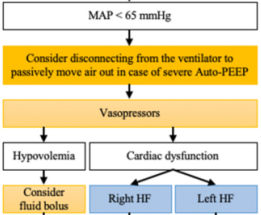
The COVID-19 pandemic revealed significant variability in mechanical ventilation training and bedside practices, highlighting the necessity for standardized, actionable protocols. This study aimed to develop the Standard Training and Operating Procedure (STOP), an evidence-based algorithm designed for managing mechanically ventilated critically ill patients and troubleshooting patient-ventilator interactions. Utilizing the Successive Approximation Model (SAM), we reviewed current guidelines and expert recommendations, created a minimum-viable prototype during a multidisciplinary "savvy start," and refined it through seven iterative review cycles involving 33 frontline clinicians. The finalized tool underwent external evaluation via a Modified-Delphi process within the Checklist for early recognition and treatment of acute illness and injury (CERTAIN) network, engaging 50 clinicians from 19 countries across four continents, with a consensus threshold of ≥70%. STOP consists of eight sequential bedside checkpoints: abnormal vital signs/ventilator alarms, assessment of ventilation adequacy, elevated peak pressure, elevated plateau pressure, lung protection against ventilator-induced lung injury, risk of oxygen toxicity, patient-ventilator asynchrony, and readiness for spontaneous awakening and breathing trials. The Delphi agreement across these steps ranged from 82% to 96%, supporting the tool's face validity and clinical relevance. STOP offers a practical framework to minimize practice variability and enhance the safety of mechanical ventilation; however, prospective implementation studies are necessary to assess its impact on adherence and patient outcomes.
Citations
Downloads
References
Hasibeder WR. Does standardization of critical care work? Curr Opin Crit Care. 2010;16(5):493–8.
https://doi.org/10.1097/MCC.0b013e32833cb84a
Belda TE, Gajic O, Rabatin JT, Harrison BA. Practice variability in management of acute respiratory distress syndrome: bringing evidence and clinician education to the bedside using a web-based teaching tool. Respir Care. 2004;49(9):1015–21.
Adams AB. Too many ventilator modes! Respir Care. 2012;57(4):653–4.
https://doi.org/10.4187/respcare.01787
Costa DK, Valley TS, Miller MA, Manojlovich M, Watson SR, McLellan P, et al. ICU team composition and its association with ABCDE implementation in a quality collaborative. J Crit Care. 2018;44:1–6.
https://doi.org/10.1016/j.jcrc.2017.09.180
Chatburn RL, Volsko TA, Hazy J, Harris LN, Sanders S. Determining the basis for a taxonomy of mechanical ventilation. Respir Care. 2012;57(4):514–24.
https://doi.org/10.4187/respcare.01327
Outcomes of Patients With Coronavirus Disease 2019 Receiving Organ Support Therapies: The International Viral Infection and Respiratory Illness Universal Study Registry: Erratum. Crit Care Med. 2021;49(5):e562.
https://doi.org/10.1097/CCM.0000000000005007
Fan E, Del Sorbo L, Goligher EC, Hodgson CL, Munshi L, Walkey AJ, et al. An Official American Thoracic Society/European Society of Intensive Care Medicine/Society of Critical Care Medicine Clinical Practice Guideline: Mechanical Ventilation in Adult Patients with Acute Respiratory Distress Syndrome. Am J Respir Crit Care Med. 2017;195(9):1253–63.
https://doi.org/10.1164/rccm.201703-0548ST
Lee JWW, Chiew YS, Wang X, Tan CP, Mat Nor MB, Cove ME, et al. Protocol conception for safe selection of mechanical ventilation settings for respiratory failure patients. Comput Methods Programs Biomed. 2022;214:106577.
https://doi.org/10.1016/j.cmpb.2021.106577
Randolph AG. A practical approach to evidence-based medicine: lessons learned from developing ventilator management protocols. Crit Care Clin. 2003;19(3):515–27.
https://doi.org/10.1016/S0749-0704(03)00012-5
Allen MW, Sites R. Leaving ADDIE for SAM: an agile model for developing the best learning experiences. United States: American Society for Training & Development; 2012.
Vukoja M, Dong Y, Adhikari NKJ, Schultz MJ, Arabi YM, Martin-Loeches I, et al. Checklist for Early Recognition and Treatment of Acute Illness and Injury: An Exploratory Multicenter International Quality-Improvement Study in the ICUs With Variable Resources. Crit Care Med. 2021;49(6):e598–e612.
https://doi.org/10.1097/CCM.0000000000004937
Manjappachar N, Kilickaya O, Dong Y, Wang BY, Chu KD, Gajic O, et al. Mechanical Ventilation Training Standardization: International Modified Delphi Survey. Critical Care Medicine. 2025;53(1).
https://doi.org/10.1097/01.ccm.0001104208.99705.59
Nasa P, Jain R, Juneja D. Delphi methodology in healthcare research: How to decide its appropriateness. World J Methodol. 2021;11(4):116–29.
https://doi.org/10.5662/wjm.v11.i4.116
Diamond IR, Grant RC, Feldman BM, Pencharz PB, Ling SC, Moore AM, et al. Defining consensus: a systematic review recommends methodologic criteria for reporting of Delphi studies. J Clin Epidemiol. 2014;67(4):401–9.
https://doi.org/10.1016/j.jclinepi.2013.12.002
Kilickaya O, Gajic O. Initial ventilator settings for critically ill patients. Crit Care. 2013;17(2):123.
https://doi.org/10.1186/cc12516
Parhar KKS, Stelfox HT, Fiest KM, Rubenfeld GD, Zuege DJ, Knight G, et al. Standardized Management for Hypoxemic Respiratory Failure and ARDS: Systematic Review and Meta-analysis. Chest. 2020;158(6):2358–69.
https://doi.org/10.1016/j.chest.2020.05.611
Devlin JW, Skrobik Y, Gelinas C, Needham DM, Slooter AJC, Pandharipande PP, et al. Clinical Practice Guidelines for the Prevention and Management of Pain, Agitation/Sedation, Delirium, Immobility, and Sleep Disruption in Adult Patients in the ICU. Crit Care Med. 2018;46(9):e825–e73.
https://doi.org/10.1097/CCM.0000000000003298
Marra A, Ely EW, Pandharipande PP, Patel MB. The ABCDEF Bundle in Critical Care. Crit Care Clin. 2017;33(2):225–43.
https://doi.org/10.1016/j.ccc.2016.12.005
Ely EW, Bennett PA, Bowton DL, Murphy SM, Florance AM, Haponik EF. Large scale implementation of a respiratory therapist-driven protocol for ventilator weaning. Am J Respir Crit Care Med. 1999;159(2):439–46.
https://doi.org/10.1164/ajrccm.159.2.9805120
Grap MJ, Strickland D, Tormey L, Keane K, Lubin S, Emerson J, et al. Collaborative practice: development, implementation, and evaluation of a weaning protocol for patients receiving mechanical ventilation. Am J Crit Care. 2003;12(5):454–60.
https://doi.org/10.4037/ajcc2003.12.5.454
Kirakli C, Ediboglu O, Naz I, Cimen P, Tatar D. Effectiveness and safety of a protocolized mechanical ventilation and weaning strategy of COPD patients by respiratory therapists. J Thorac Dis. 2014;6(9):1180–6.
Gupta P, Giehler K, Walters RW, Meyerink K, Modrykamien AM. The effect of a mechanical ventilation discontinuation protocol in patients with simple and difficult weaning: impact on clinical outcomes. Respir Care. 2014;59(2):170–7.
https://doi.org/10.4187/respcare.02558
Ely EW, Baker AM, Dunagan DP, Burke HL, Smith AC, Kelly PT, et al. Effect on the duration of mechanical ventilation of identifying patients capable of breathing spontaneously. N Engl J Med. 1996;335(25):1864–9.
https://doi.org/10.1056/NEJM199612193352502
Pun BT, Balas MC, Barnes-Daly MA, Thompson JL, Aldrich JM, Barr J, et al. Caring for Critically Ill Patients with the ABCDEF Bundle: Results of the ICU Liberation Collaborative in Over 15,000 Adults. Crit Care Med. 2019;47(1):3–14.
https://doi.org/10.1097/CCM.0000000000003482
Yilmaz M, Gajic O. Optimal ventilator settings in acute lung injury and acute respiratory distress syndrome. Eur J Anaesthesiol. 2008;25(2):89–96.
https://doi.org/10.1017/S0265021507003006
Berg AC, Evans E, Okoro UE, Pham V, Foley TM, Hlas C, et al. Respiratory Therapist-Driven Mechanical Ventilation Protocol Is Associated With Increased Lung Protective Ventilation. Respir Care. 2024;69(9):1071–80.
https://doi.org/10.4187/respcare.11599
Acute Respiratory Distress Syndrome N, Brower RG, Matthay MA, Morris A, Schoenfeld D, Thompson BT, et al. Ventilation with lower tidal volumes as compared with traditional tidal volumes for acute lung injury and the acute respiratory distress syndrome. N Engl J Med. 2000;342(18):1301–8.
https://doi.org/10.1056/NEJM200005043421801
Sahetya SK, Goligher EC, Brower RG. Fifty Years of Research in ARDS. Setting Positive End-Expiratory Pressure in Acute Respiratory Distress Syndrome. Am J Respir Crit Care Med. 2017;195(11):1429–38.
https://doi.org/10.1164/rccm.201610-2035CI
Urner M, Juni P, Rojas-Saunero LP, Hansen B, Brochard LJ, Ferguson ND, et al. Limiting Dynamic Driving Pressure in Patients Requiring Mechanical Ventilation. Crit Care Med. 2023;51(7):861–71.
https://doi.org/10.1097/CCM.0000000000005844
Evans L, Rhodes A, Alhazzani W, Antonelli M, Coopersmith CM, French C, et al. Surviving Sepsis Campaign: International Guidelines for Management of Sepsis and Septic Shock 2021. Crit Care Med. 2021;49(11):e1063–e143.
Foti G, Cereda M, Banfi G, Pelosi P, Fumagalli R, Pesenti A. End-inspiratory airway occlusion: a method to assess the pressure developed by inspiratory muscles in patients with acute lung injury undergoing pressure support. Am J Respir Crit Care Med. 1997;156(4 Pt 1):1210–6.
https://doi.org/10.1164/ajrccm.156.4.96-02031
Docci M, Rezoagli E, Teggia-Droghi M, Coppadoro A, Pozzi M, Grassi A, et al. Individual response in patient's effort and driving pressure to variations in assistance during pressure support ventilation. Ann Intensive Care. 2023;13(1):132.
https://doi.org/10.1186/s13613-023-01231-9
Gao R, Zhou JX, Yang YL, Xu SS, Zhou YM, Zhang L, et al. Use of pressure muscle index to predict the contribution of patient's inspiratory effort during pressure support ventilation: a prospective physiological study. Front Med (Lausanne). 2024;11:1390878.
https://doi.org/10.3389/fmed.2024.1390878
van den Berg MJW, Heunks L, Doorduin J. Advances in achieving lung and diaphragm-protective ventilation. Curr Opin Crit Care. 2025;31(1):38–46.
https://doi.org/10.1097/MCC.0000000000001228
Burns KE, Meade MO, Lessard MR, Hand L, Zhou Q, Keenan SP, et al. Wean earlier and automatically with new technology (the WEAN study). A multicenter, pilot randomized controlled trial. Am J Respir Crit Care Med. 2013;187(11):1203–11.
https://doi.org/10.1164/rccm.201206-1026OC
Schadler D, Engel C, Elke G, Pulletz S, Haake N, Frerichs I, et al. Automatic control of pressure support for ventilator weaning in surgical intensive care patients. Am J Respir Crit Care Med. 2012;185(6):637–44.
https://doi.org/10.1164/rccm.201106-1127OC
Herasevich V, Tsapenko M, Kojicic M, Ahmed A, Kashyap R, Venkata C, et al. Limiting ventilator-induced lung injury through individual electronic medical record surveillance. Crit Care Med. 2011;39(1):34–9.
https://doi.org/10.1097/CCM.0b013e3181fa4184
Vukoja M, Kashyap R, Gavrilovic S, Dong Y, Kilickaya O, Gajic O. Checklist for early recognition and treatment of acute illness: International collaboration to improve critical care practice. World J Crit Care Med. 2015;4(1):55–61.
https://doi.org/10.5492/wjccm.v4.i1.55
Thomas VK, Abraham SV. Adding an "R" in the "DOPE" mnemonic for ventilator troubleshooting. Indian J Crit Care Med. 2018;22(5):388.
https://doi.org/10.4103/ijccm.IJCCM_501_17
Hirshberg EL, Lanspa MJ, Peterson J, Carpenter L, Wilson EL, Brown SM, et al. Randomized feasibility trial of a low tidal volume–airway pressure release ventilation protocol compared with traditional airway pressure release ventilation and volume control ventilation protocols. Crit Care Med. 2018;46(12):1943–52.
https://doi.org/10.1097/CCM.0000000000003437
Rittayamai N, Katsios CM, Beloncle F, Friedrich JO, Mancebo J, Brochard L. Pressure-controlled vs volume-controlled ventilation in acute respiratory failure: A physiology-based narrative and systematic review. Chest. 2015;148(2):340–55.
https://doi.org/10.1378/chest.14-3169
Prescott HC, Brower RG, Cooke CR, Phillips G, O'Brien JM, National Institutes of Health Acute Respiratory Distress Syndrome I. Factors associated with elevated plateau pressure in patients with acute lung injury receiving lower tidal volume ventilation. Crit Care Med. 2013;41(3):756–64.
https://doi.org/10.1097/CCM.0b013e3182741790
Maung AA, Johnson DC, Luckianow GM, Kaplan LJ. Ventilator gas delivery wave form substantially impacts plateau pressure and peak-to-plateau pressure gradient determination. J Trauma Acute Care Surg. 2015;78(5):976–9.
https://doi.org/10.1097/TA.0000000000000615
Biehl M, Kashiouris MG, Gajic O. Ventilator-induced lung injury: minimizing its impact in patients with or at risk for ARDS. Respir Care. 2013;58(6):927–37.
https://doi.org/10.4187/respcare.02347
Hochberg CH, Semler MW, Brower RG. Oxygen toxicity in critically ill adults. Am J Respir Crit Care Med. 2021;204(6):632–41.
https://doi.org/10.1164/rccm.202102-0417CI
Investigators I-R, the A, New Zealand Intensive Care Society Clinical Trials G, Mackle D, Bellomo R, Bailey M, et al. Conservative oxygen therapy during mechanical ventilation in the ICU. N Engl J Med. 2020;382(11):989–98.
https://doi.org/10.1056/NEJMoa1903297
Zhou Y, Holets SR, Li M, Cortes-Puentes GA, Meyer TJ, Hanson AC, et al. Etiology, incidence, and outcomes of patient–ventilator asynchrony in critically-ill patients undergoing invasive mechanical ventilation. Sci Rep. 2021;11(1):12390.
https://doi.org/10.1038/s41598-021-90013-z
Subira C, de Haro C, Magrans R, Fernandez R, Blanch L. Minimizing asynchronies in mechanical ventilation: current and future trends. Respir Care. 2018;63(4):464–78.
https://doi.org/10.4187/respcare.05949
Gilstrap D, MacIntyre N. Patient–ventilator interactions. Implications for clinical management. Am J Respir Crit Care Med. 2013;188(9):1058–68.
https://doi.org/10.1164/rccm.201212-2214CI
Girard TD, Kress JP, Fuchs BD, Thomason JW, Schweickert WD, Pun BT, et al. Efficacy and safety of a paired sedation and ventilator weaning protocol for mechanically ventilated patients in intensive care (Awakening and Breathing Controlled trial): a randomised controlled trial. Lancet. 2008;371(9607):126–34.
https://doi.org/10.1016/S0140-6736(08)60105-1
Hooper MH, Girard TD. Sedation and weaning from mechanical ventilation: linking spontaneous awakening trials and spontaneous breathing trials to improve patient outcomes. Crit Care Clin. 2009;25(3):515–25, viii.
https://doi.org/10.1016/j.ccc.2009.04.002
Krishnan JA, Moore D, Robeson C, Rand CS, Fessler HE. A prospective, controlled trial of a protocol-based strategy to discontinue mechanical ventilation. Am J Respir Crit Care Med. 2004;169(6):673–8.
Downloads
Additional Files
Published
Issue
Section
Categories
License
Copyright (c) 2026 Oguz Kilickaya, Dimitrios Kantas, Nirmala Manjappachar, Baiyong Wang, Marko Nemet, Rana Gur, Yue Dong, Srdjan Gajic, Mirela Alic, Philippe R. Bauer, Sumera Ahmad, Alice Gallo de Moraes, Alexander Niven, Richard A. Oeckler, Amos Lal, Ognjen Gajic

This work is licensed under a Creative Commons Attribution 4.0 International License.