

Peripheral blood nucleated red blood cells predict short-term mortality and clinical outcomes in critically ill adults: A systematic review and meta-analysis
Abstract
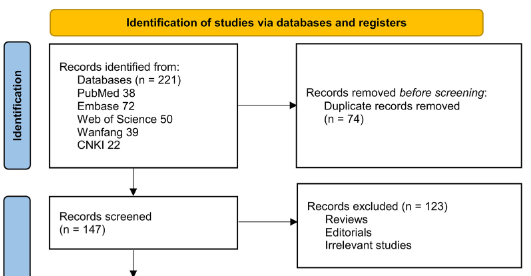
Peripheral blood nucleated red blood cells (NRBCs) are rarely detected in healthy adults but may appear during severe systemic inflammation, tissue hypoxia, and hematopoietic stress in critical illness. This meta-analysis aimed to evaluate the prognostic value of peripheral blood NRBCs for mortality and clinical outcomes in critically ill adults. The study followed the Preferred Reporting Items for Systematic Reviews and Meta-Analyses (PRISMA) guidelines, was registered in the International Prospective Register of Systematic Reviews (PROSPERO; CRD420251250833), and included cohort studies identified through PubMed, Embase, the Cochrane Library, and Web of Science from inception to June 2, 2026. Study quality, risk of bias, and certainty of evidence were assessed using the Newcastle–Ottawa Scale (NOS), Quality In Prognosis Studies (QUIPS) tool, and Grading of Recommendations Assessment, Development and Evaluation (GRADE) approach. Overall, 20 cohort studies including 17,691 critically ill adults were included. NRBC positivity was associated with higher 30-day mortality than NRBC negativity, both by odds ratio (OR = 3.14, 95% confidence interval [CI]: 2.13–4.62) and hazard ratio (HR = 1.55, 95% CI: 1.24–1.93). NRBC-positive patients also had longer total hospital stay (mean difference [MD] = 8.73 days, 95% CI: 2.14–15.33) and intensive care unit (ICU) stay (MD = 7.51 days, 95% CI: 3.29–11.73), whereas 90-day mortality was not significantly different between groups. Dose–response analysis showed a nonlinear positive association between increasing NRBC concentrations and 30-day mortality risk. Peripheral blood NRBCs may serve as an adjunctive marker of short-term prognosis and illness severity in critically ill adults, although substantial heterogeneity and very low certainty for several outcomes warrant cautious interpretation.
Keywords
Critical illness nucleated red blood cells sepsis acute respiratory distress syndrome prognosisDownloads
References
Rudd KE, Johnson SC, Agesa KM, Shackelford KA, Tsoi D, Kievlan DR, et al. Global, regional, and national sepsis incidence and mortality, 1990–2017: analysis for the Global Burden of Disease Study. Lancet. 2020;395(10219):200–11. https://doi.org/10.1016/S0140-6736(19)32989-7 DOI: https://doi.org/10.1016/S0140-6736(19)32989-7
Yang P, Sjoding MW. Acute respiratory distress syndrome. Crit Care Clin. 2024;40(2):309–27. https://doi.org/10.1016/j.ccc.2023.12.003 DOI: https://doi.org/10.1016/j.ccc.2023.12.003
Chinudomwong P, Khongjaroensakun N, Chatachote B, Chaothai N, Paisooksantivatana K. Improving the efficiency of the autoverification workflow for nucleated red blood cell reporting in the hematology laboratory. Int J Lab Hematol. 2021;43(6):1373–8. https://doi.org/10.1111/ijlh.13641 DOI: https://doi.org/10.1111/ijlh.13641
Pikora K, Krętowska-Grunwald A, Krawczuk-Rybak M, Sawicka-Żukowska M. Diagnostic value and prognostic significance of nucleated red blood cells (NRBCs) in selected medical conditions. Cells. 2023;12(14):1817. https://doi.org/10.3390/cells12141817 DOI: https://doi.org/10.3390/cells12141817
Schmidt G, Martens A, Koch C, Markmann M, Schneck E, Matt U, et al. Nucleated red blood cells are a late biomarker in predicting intensive care unit mortality in patients with COVID-19 acute respiratory distress syndrome: an observational cohort study. Front Immunol. 2024;15:1313977. https://doi.org/10.3389/fimmu.2024.1313977 DOI: https://doi.org/10.3389/fimmu.2024.1313977
Narcı H, Oktay MM, Ayrık C, Çimen MBY. Nucleated red blood cells as predictor of all-cause mortality in emergency department. Am J Emerg Med. 2021;46:335–8. https://doi.org/10.1016/j.ajem.2020.10.002 DOI: https://doi.org/10.1016/j.ajem.2020.10.002
Noor T, Imran A, Raza H, Sarwar M, Umer S, Fatima M. Frequency of nucleated red blood cells in the peripheral blood of ICU-admitted patients. Cureus. 2023;15(1):e33827. https://doi.org/10.7759/cureus.33827 DOI: https://doi.org/10.7759/cureus.33827
Stachon A, Holland-Letz T, Krieg M. High in-hospital mortality of intensive care patients with nucleated red blood cells in blood. Clin Chem Lab Med. 2004;42(8):933–8. https://doi.org/10.1515/CCLM.2004.151 DOI: https://doi.org/10.1515/CCLM.2004.151
Wang J, Su Z, Zhao X, Jin X, Lu G, Yuan Y, et al. Investigation of the possible causes of NRBC in ICU patients and the dynamic trend of NRBC count in survival and death patients or with different underlying diseases: a retrospective study. Evid Based Complement Alternat Med. 2023;2023:9076647. https://doi.org/10.1155/2023/9076647 DOI: https://doi.org/10.1155/2023/9076647
Page MJ, McKenzie JE, Bossuyt PM, Boutron I, Hoffmann TC, Mulrow CD, et al. The PRISMA 2020 statement: an updated guideline for reporting systematic reviews. BMJ. 2021;372:n71. https://doi.org/10.1136/bmj.n71 DOI: https://doi.org/10.1136/bmj.n71
Stang A. Critical evaluation of the Newcastle–Ottawa scale for the assessment of the quality of nonrandomized studies in meta-analyses. Eur J Epidemiol. 2010;25(9):603–5. https://doi.org/10.1007/s10654-010-9491-z DOI: https://doi.org/10.1007/s10654-010-9491-z
Greenland S, Longnecker MP. Methods for trend estimation from summarized dose–response data, with applications to meta-analysis. Am J Epidemiol. 1992;135(11):1301–9. https://doi.org/10.1093/oxfordjournals.aje.a116237 DOI: https://doi.org/10.1093/oxfordjournals.aje.a116237
Orsini N, Bellocco R, Greenland S. Generalized least squares for trend estimation of summarized dose–response data. Stata J. 2006;6(1):40–57. https://doi.org/10.1177/1536867X0600600103 DOI: https://doi.org/10.1177/1536867X0600600103
Stachon A, Kempf R, Holland-Letz T, Friese J, Becker A, Krieg M. Daily monitoring of nucleated red blood cells in the blood of surgical intensive care patients. Clin Chim Acta. 2006;366(1–2):329–35. https://doi.org/10.1016/j.cca.2005.11.022 DOI: https://doi.org/10.1016/j.cca.2005.11.022
Stachon A, Segbers E, Holland-Letz T, Kempf R, Hering S, Krieg M. Nucleated red blood cells in the blood of medical intensive care patients indicate increased mortality risk: a prospective cohort study. Crit Care. 2007;11(3):R62. https://doi.org/10.1186/cc5932 DOI: https://doi.org/10.1186/cc5932
Desai S, Jones SL, Turner KL, Hall J, Moore LJ. Nucleated red blood cells are associated with a higher mortality rate in patients with surgical sepsis. Surg Infect (Larchmt). 2012;13(6):360–5. https://doi.org/10.1089/sur.2011.089 DOI: https://doi.org/10.1089/sur.2011.089
Shah R, Reddy S, Horst HM, Stassinopoulos J, Jordan J, Rubinfeld I. Getting back to zero with nucleated red blood cells: following trends is not necessarily a bad thing. Am J Surg. 2012;203(3):343–6. https://doi.org/10.1016/j.amjsurg.2011.10.002 DOI: https://doi.org/10.1016/j.amjsurg.2011.10.002
De Moura Monteiro Júnior JG, De Oliveira Cipriano Torres D, Da Silva MCFC, De Brito Ramos TM, Alves ML, Filho WJN, et al. Nucleated red blood cells as predictors of all-cause mortality in cardiac intensive care unit patients: a prospective cohort study. PLoS One. 2015;10(12):e0144259. https://doi.org/10.1371/journal.pone.0144259 DOI: https://doi.org/10.1371/journal.pone.0144259
Purtle SW, Horkan CM, Moromizato T, Gibbons FK, Christopher KB. Nucleated red blood cells, critical illness survivors and postdischarge outcomes: a cohort study. Crit Care. 2017;21(1):154. https://doi.org/10.1186/s13054-017-1724-z DOI: https://doi.org/10.1186/s13054-017-1724-z
de Moura Monteiro Junior JG, Cipriano Torres DdO, Freire Clementino da Silva MC, de Holanda Martins CM, da Silva IK, Mendonca do Nascimento ME, et al. Prognostic value of hematological parameters in patients with acute myocardial infarction: intrahospital outcomes. PLoS One. 2018;13(4):e0194897. https://doi.org/10.1371/journal.pone.0194897 DOI: https://doi.org/10.1371/journal.pone.0194897
Menk M, Giebelhaeuser L, Vorderwuelbecke G, Gassner M, Graw JA, Weiss B, et al. Nucleated red blood cells as predictors of mortality in patients with acute respiratory distress syndrome (ARDS): an observational study. Ann Intensive Care. 2018;8(1):42. https://doi.org/10.1186/s13613-018-0387-5 DOI: https://doi.org/10.1186/s13613-018-0387-5
Xu C, Wang J, Jin X, Yuan Y, Lu G. Establishment of a predictive model for outcomes in patients with severe acute pancreatitis by nucleated red blood cells combined with Charlson complication index and APACHE II score. Turk J Gastroenterol. 2020;31(12):936–41. https://doi.org/10.5152/TJG.2020.19954 DOI: https://doi.org/10.5152/tjg.2020.19954
Hashmi SA, Khowaja R, Ali M, Mangi AR, Khowaja A, Riaz G, et al. Prognostic significance of nucleated RBCs in predicting mortality among ST-elevation myocardial infarction patients admitted to the ICU. Cureus. 2023;15(9):e45445. https://doi.org/10.7759/cureus.45445 DOI: https://doi.org/10.7759/cureus.45445
Loesaus S, Zahn PK, Bechtel M, Strauch JT, Buchwald D, Baumann A, et al. Nucleated red blood cells are a predictor of mortality in patients under extracorporeal membrane oxygenation. Eur J Med Res. 2023;28(1). https://doi.org/10.1186/s40001-023-01243-y DOI: https://doi.org/10.1186/s40001-023-01243-y
Dhanni VK, Chauhan S, Gera A. Nucleated red blood cells: predictor of prognosis and mortality risk in critically ill patients. J Cardiovasc Dis Res. 2024;15(4):2028–33. https://doi.org/10.48047/jcdr.2024.15.04.244
Kirsch A, Niebhagen F, Goldammer M, Waske S, Heubner L, Petrick P, et al. Nucleated red blood cells as a prognostic marker for mortality in patients with SARS-CoV-2-induced ARDS: an observational study. J Anesth Analg Crit Care. 2024;4(1):38. https://doi.org/10.1186/s44158-024-00174-2 DOI: https://doi.org/10.1186/s44158-024-00174-2
Liu HQ, Wang GQ, Zhang CS, Wang X, Shi JK, Qu F, et al. Nucleated red blood cell distribution in critically ill patients with acute pancreatitis: a retrospective cohort study. BMC Gastroenterol. 2024;24(1). https://doi.org/10.1186/s12876-024-03444-z DOI: https://doi.org/10.1186/s12876-024-03444-z
Czempik PF, Wiórek A. Extended hematological parameters and short-term mortality in sepsis patients: a retrospective study. J Clin Med. 2025;14(9):3243. https://doi.org/10.3390/jcm14093243 DOI: https://doi.org/10.3390/jcm14093243
Niebhagen F, Kirsch A, Schau R, Waske S, Heubner L, Mirus M, et al. Nucleated red blood cells as a prognostic marker for mortality in septic critically ill patients: an observational study. Anaesth Crit Care Pain Med. 2025;44(6):101605. https://doi.org/10.1016/j.accpm.2025.101605 DOI: https://doi.org/10.1016/j.accpm.2025.101605
Phan TT, Vy HT, Ho TT, Tran VT, Tran TT, Pho SP, et al. Emergence role of nucleated red blood cells in molecular response evaluation for chronic myeloid leukemia. Int J Gen Med. 2019;12:333–41. https://doi.org/10.2147/IJGM.S219744 DOI: https://doi.org/10.2147/IJGM.S219744
Jiang H, Yang L, Guo L, Cui N, Zhang G, Liu C, et al. Impaired mitophagy of nucleated erythroid cells leads to anemia in patients with myelodysplastic syndromes. Oxid Med Cell Longev. 2018;2018:6328051. https://doi.org/10.1155/2018/6328051 DOI: https://doi.org/10.1155/2018/6328051
Ibrahim MH, Moustafa AN, Saedii AAF, Hassan EE. Cord blood erythropoietin and cord blood nucleated red blood cells for prediction of adverse neonatal outcome associated with maternal obesity in term pregnancy: prospective cohort study. J Matern Fetal Neonatal Med. 2016;30(18):2237–42. https://doi.org/10.1080/14767058.2016.1243101 DOI: https://doi.org/10.1080/14767058.2016.1243101
Jenkins PM, Al Daoud F, Mercer L, Scholten D, Wong K, Perinjelil V, et al. The presence of nucleated red blood cells as an indicator for increased mortality and morbidity in burn patients. J Burn Care Res. 2021;42(6):1210–4. https://doi.org/10.1093/jbcr/irab035 DOI: https://doi.org/10.1093/jbcr/irab035
Piggott KD, Maqsood S, Warner CL, Pettitt T, Yang S, Turner J, et al. Nucleated red blood cells as a biomarker for mortality in neonates following cardiac surgery. Cardiol Young. 2022;32(7):1048–52. https://doi.org/10.1017/S1047951121003577 DOI: https://doi.org/10.1017/S1047951121003577
Tang W, Zhang W, Li X, Cheng J, Liu Z, Zhou Q, et al. Hematological parameters in patients with bloodstream infection: a retrospective observational study. J Infect Dev Ctries. 2020;14(11):1264–73. https://doi.org/10.3855/jidc.12811 DOI: https://doi.org/10.3855/jidc.12811
Zhang H-B, Chen J, Lan Q-F, Ma X-J, Zhang S-Y. Diagnostic values of red cell distribution width, platelet distribution width and neutrophil–lymphocyte count ratio for sepsis. Exp Ther Med. 2016;12(4):2215–9. https://doi.org/10.3892/etm.2016.3583 DOI: https://doi.org/10.3892/etm.2016.3583
Dörfelt R, Pabst K, Hartmann K. Nucleated red blood cells in critically ill cats. J Feline Med Surg. 2025:1098612X251387446. https://doi.org/10.1177/1098612X251387446 DOI: https://doi.org/10.1177/1098612X251387446
Ferber A, Fridel Z, Weissmann-Brenner A, Minior VK, Divon MY. Are elevated fetal nucleated red blood cell counts an indirect reflection of enhanced erythropoietin activity? Am J Obstet Gynecol. 2004;190(5):1473–5. https://doi.org/10.1016/j.ajog.2004.02.033 DOI: https://doi.org/10.1016/j.ajog.2004.02.033
Bin-Nun A, Mimouni FB, Fink D, Sela H, Hammerman C. Elevated nucleated red blood cells at birth predict hemodynamically significant patent ductus arteriosus. J Pediatr. 2016;177:313–5. https://doi.org/10.1016/j.jpeds.2016.07.005 DOI: https://doi.org/10.1016/j.jpeds.2016.07.005
Christensen RD, Lambert DK, Richards DS. Estimating the nucleated red blood cell “emergence time” in neonates. J Perinatol. 2014;34(2):116–9. https://doi.org/10.1038/jp.2013.113 DOI: https://doi.org/10.1038/jp.2013.113
Kuert S, Holland-Letz T, Friese J, Stachon A. Association of nucleated red blood cells in blood and arterial oxygen partial tension. Clin Chem Lab Med. 2011;49(2):257–63. https://doi.org/10.1515/CCLM.2011.041 DOI: https://doi.org/10.1515/CCLM.2011.041
Danise P, Maconi M, Barrella F, Di Palma A, Avino D, Rovetti A, et al. Evaluation of nucleated red blood cells in the peripheral blood of hematological diseases. Clin Chem Lab Med. 2012;50(2). https://doi.org/10.1515/cclm.2011.766 DOI: https://doi.org/10.1515/cclm.2011.766
Elahi S, Vega-López MA, Herman-Miguel V, Ramírez-Estudillo C, Mancilla-Ramírez J, Motyka B, et al. CD71+ erythroid cells in human neonates exhibit immunosuppressive properties and compromise immune response against systemic infection in neonatal mice. Front Immunol. 2020;11:597433. https://doi.org/10.3389/fimmu.2020.597433 DOI: https://doi.org/10.3389/fimmu.2020.597433
Spindler KR, Nombela I, Ortega-Villaizan MdM. Nucleated red blood cells: immune cell mediators of the antiviral response. PLoS Pathog. 2018;14(4):e1006910. https://doi.org/10.1371/journal.ppat.1006910 DOI: https://doi.org/10.1371/journal.ppat.1006910
Yan QY, Mo XM, Cai WW, Peng Y, Huang HL. Nucleated red blood cell count as a novel predictive biomarker for acute kidney injury and prognosis in patients with acute pancreatitis: a retrospective cohort study. PLoS One. 2025;20(8):e0330611. https://doi.org/10.1371/journal.pone.0330611 DOI: https://doi.org/10.1371/journal.pone.0330611
Macichová M, Grochová M, Rácz O, Firment J, Mitníková M, Rosenberger J, et al. Improvement of mortality prediction accuracy in critically ill patients through combination of SOFA and APACHE II score with markers of stress haematopoiesis. Int J Lab Hematol. 2020;42(6):796–800. https://doi.org/10.1111/ijlh.13308 DOI: https://doi.org/10.1111/ijlh.13308
Küçük B, Macit Aydın E, Kocabeyoğlu GM, Sayın MM. Nucleated red blood cells for predicting mortality in intensive care unit patients with sepsis. Med Sci Monit. 2026;32:e950504. https://doi.org/10.12659/MSM.950504 DOI: https://doi.org/10.12659/MSM.950504
Article files
Additional Files
Publication details
- Citation
- Advance online
- Language
- EN
- License
- CC BY 4.0
- Section
- Systematic review/Meta analysis
How to cite (Vancouver)
Li L, Lan Y, Fan C. Peripheral blood nucleated red blood cells predict short-term mortality and clinical outcomes in critically ill adults: A systematic review and meta-analysis. Biomol Biomed. 2026. https://doi.org/10.17305/bb.2026.14398