

Growth hormone (GH) usage and abuse
Abstract
Growth hormone is essential for body growth but it also modulates metabolic pathways as well as neural, reproductive, immune, cardiovascular, and pulmonary functions. Numerous beneficial effects of growth hormone have led to its expanded therapeutic use in both children and adults. There are several officially approved applications of human growth hormone and many more proposed applications that resulted from huge number of clinical studies on GH therapy.
Growth hormone abuse includes improper or excessive use. Over the last decade GH has become one of the most commonly abused drugs in sport due to the fact that its administration is currently undetectable. Enormous doses that are injected and frequent simultaneous abuse of other substances such as other anabolic steroids (testosterone) lead to frequent side effects that may be fatal.
In spite of numerous beneficial effects of growth hormone the true physiological impact of GH replacement therapy on various metabolic parameters may be confounded by the dose and route of administration of GH so accurate physicians’ monitoring during GH therapy is needed.
Keywords
growth hormone therapeutic use abuseFull text
Introduction
Growth hormone (GH) is a polypeptide hormone secreted by the pituitary gland in a pulsatile manner every two hours with a mean daily secretion of 0.5 mg. The predominant form has a molecular weight of 22kDa and half-life in plasma of 15-20 min after secretion or intravenous injection (1). After subcutaneous or intramuscular injection, blood concentration of GH reach the peak between 1 and B h after injection and drop to undetectable levels 24h after administration. When administered by mouth GH is completely digested to its constituent amino acids (2). After secretion GH may be found in the system circulation in the “free” state or bind to GH binding protein (GHBP). Growth hormone receptors are present on all cells in the body. One GH molecule binds two receptors and leads to their dimerisation. This process is essential for initiation of intracellular signaling (3). The circulating GH is removed from the blood stream through receptor-mediated degradation, predominantly in the liver and kidney. The liver and kidney internalize GH receptor complex and completely degrade it to its basic amino acids. Only small quantities of GH appear in the urine(l).
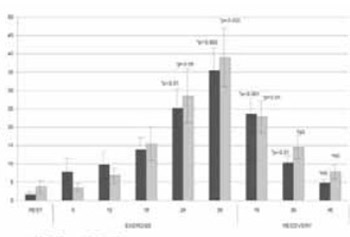
Growth hormone secretion is controlled by two hypothalamic peptides: growth hormone releasing hormone-GHRH and somatostatin (SS) which are final mediators of numerous neuroendocrine, metabolic, nutritional and immune influences on GH secretion (4). The precise mechanism that mediates the effects of physiological factors on GH secretion in humans may be difficult to determine. The most important stimuli of GH secretion in humans are sleep, exercise and stress (5). The sleep-related GH secretion occurs most during the phase of deep slow-wave sleep in the early hours of sleep. In circumstances where sleep pattern is disturbed GH secretion is impaired. Results of numerous studies showed that acute physical exercise increase GH secretion within 10-20 minutes of aerobic exercise, peak at the and of exercise and remain elevated for approximately one to two hours (6). Ageing is associated with decreased concentrations of GH. In man, each decade of increasing age is associated with a 14% decline in 24 hour GH production rates (7). The total amount of GH secreted during 24 h in normal adults over the age of 65 is, in the majority of cases, concurs with people with organic GH deficiency secondary to pituitary pathology. There is, thus, evidence of the development of functional GHD with increasing age, the so called “somatopause”. The majority of middle-aged and elderly normal subjects may be considered incompletely GHD.
Growth hormone is essential for body growth but as normal growth occurs over relatively short period of time and GH secretion continues through life it is not surprising that GH has many other functions that regulate body composition, fluid homeostasis, glucose and lipid metabolism, bone metabolism, exercise performance and cardiac function (8). These actions improve the quality of life of adults and confer beneficial effects when used appropriately. Growth hormone increases protein synthesis (9). Studies of Florini and al. (10) showed that GH increased the number and activity of ribosomes and increased RNA polymerase in rat muscle suggesting that GH may control synthesis at the translation level. Growth hormone may also reduce urea synthesis increasing the availability of nitrogen for protein synthesis. When GH is replaced protein synthesis rates in the postabsortive and postprandial state are increased which leads to protein accretion and increase in lean body mass (LBM). The effects of GH on postabsortptive glucose metabolism are more subtle. Though muscle utilisation of glucose is already low the further suppression of glucose uptake is typically seen after GH exposure. Large dose of GH were reported to decrease postabsorptive glucose output acutely, compatible with increased glucose uptake while in vitro experiments have shown increased gluconeogenesis (11). It is still beyond doubt that GH contributes to the overall insulin resistance of type 1 diabetes and also acts as initiator of the vicious circles leading to acute metabolic derangement (12).
Growth hormone stimulates lypolisis. Pulsatile and continuous administration of more moderate amounts of GH 70-400 micrograms to healthy postabsortive humans reveals clear dose-dependent stimulation of lypolysis, circulation levels of free fatty acids (FFA) and glycerol and increased lipid oxidation rates (13).
All these metabolic effects influence body composition increasing LBM and decreasing fat body mass (13). Several independent studies showed that GH is capable of affecting cardiac function by modulating preload, after load and contractility through direct and indirect mechanism (14). Some studies showed that administration of GH and IGF I reduce peripheral vascular resistance (15). Studies on animals showed that GH directly stimulates myocyte growth (14).
Growth hormone use
These numerous beneficial physiological effects of growth hormone led to extended application of the hormone in both children and adults.
The therapeutic application of human growth hormone was first demonstrated 45 years ago in the treatment of pituitary dwarf. At first, the quantities were limited and originated from cadaver pituitaries. Ever since, the number of proposed applications of human growth hormone has grown. Biosynthetic GH initially became available for prescription use in the United States in 1985. Data indicated that the first therapeutic application in 1985 was followed by clinical complications. Three young men developed Creutzfeldt-Jakob disease caused by contaminated material (16). Today, recombinant GH with amino acid sequence identical to GH of human pituitary origin is produced by several pharmaceutics companies. Growth hormone preparations that contain minimum impurities, are apparently safe and readily available.
The officially approved uses of human growth hormone vary from country to country, but generally include :
in pediatric conditions:
- children with growth hormone deficiency or insufficiency
This is the most important indication for GH therapeutic application (17). The cause for the GH insufficiency is particularly important in determining appropriate treatment. Because of its pronounced anabolic effects, GH is contraindicated in children with an active malignant condition.
- Turner syndrome
Growth hormone may be used in the cases of short stature induced by Turner syndrome (18). Because the growth in these patients varies the decision whether and when to treat with GH should be made on the basis of each patient’s height and growth velocity.
- - poor growth due to chronic renal insufficiency (CRI) Growth delay in children with CRI, resulting from numerous physiological derangements including acidosis, secondary hyperparathyroidism, malnutrition or zinc deficiency, is an important indication for GH use (19). Also, there are some pediatric conditions for which GH therapy is under investigation:
- - Idiopathic, genetic or primordial short stature in children who are more than 2.5 standard deviations below mean. Numerous clinical trails have documented the capacity of GH to induce growth acceleration in such cases but several reports suggest that it may enhance pubertal development and may reduce the duration of growth during puberty (20).
- constitutional delay of growth and development
This clinical state is characterized by normal prenatal growth followed by growth deceleration during infancy and childhood. This causes significant psychosocial adolescent stress. Of note, the use of GH in these cases will result in permanent closure of epiphysis pre-eluding further growth (20).
- intrauterine growth retardation and Russell-Silver syndrome
The children whose growth has not caught up by the age of 4 may benefit from GH therapy, as some studies have suggested (21).
- skeletal dysphasia’s
Growth hormone therapy was tried in several skeletal dysphasia’s associated with abnormally short stature (22). Much of the experience in treating these conditions was gained in management of achondroplasia.
- osteogenesis imperfecta
Some studies showed that this condition may be effectively treated with GH. In particular, with such treatment patients may experience improved bone mineralization and improved growth (23).
- Prader-Willi syndrome
Preliminary findings suggest that GH treatment in some patients with Prader-Willi syndrome accelerates growth, reduces hyperphagia, appreciably affects lypolysis and decreases obesity (24).
- Down syndrome and the other syndromes associated with short stature
Because short stature is a characteristic of many syndromes GH therapy has been attempted in several conditions including Down syndrome (25), Fanconi syndrome, Bloom syndrome.
in adults (who have completed their statural growth)
In spite of these beneficial effects AACE Guidelines for growth hormone use, list approved use of GH in adults only in cases of:
- adult growth hormone deficiency (GHD)
This is the most important indication for GH replacement in adults (20). Importance of GHD in adulthood as a disease first became apparent in the late 1980s. Studies estimated total of 35000 adults with GHD in USA and approximately 6000 new cases that occur each year. GHD adults have several abnormal clinical features including increased adiposity, reduced muscle strength and exercise capacity, and impaired psychological well-being. Some of these features are normal signs of aging so certain specific biochemical criteria remain necessary for diagnosis.
- AIDS related wasting
HGH may also play a role in immune reconstitution (26) and body composition improvement in AIDS patients. In addition to these generally accepted therapeutic applications of human growth hormone many proposed applications have not been established as yet. The anabolic actions of human GH made it attractive as a potential agent for catabolic problems in wide range of clinical conditions including:
- - severally catabolic patients in an intensive care environment (27)
- - chronic catabolic states (16)
- - burns (28)
- - cystic fibrosis (29)
- - inflammatory bowel disease (30)
- - infertility short-gut syndrome (30)
- - obesity (31)
GH Therapeutic use in Cardiovascular Medicine
A number of animal studies have shown that therapeutic use of GH could be beneficial in experimental model of heart failure with growth promoting and positive inotropic actions. Studies by Duerr and Yang (32) demonstrated beneficial effects of exogenous administration of insulinlike growth factor (IGF-I) and GH in the rat model of post-infarction heart failure. Some studies showed remarkable enhancement of cardiac function following GH therapy in GHD patients with severe dilated cardiomyopathy (33). Following these findings, several investigations by independent groups have confirmed the efficacy of GH in more advanced stages of heart failure. Large placebo controlled trails to confirm these data are currently ongoing. Recent evidence also showed that GH secretion may be impaired in patients with less advanced stages of heart failure.
Growth Hormone Abuse
Growth hormone abuse includes improper or excessive use (34). There are a lot of scientific debates on what type of GH applications may be labeled as abuse. Over the last decade GH has become one of the most common drugs in elite sport. For the first time it was discovered in possession of cyclists during Toure de France in 1998 (35). Since that period the abuse of recombinant human growth hormone in sports is considered to be a widespread phenomenon. Its popularity lies in the fact that it possesses marked ergogenic properties. Although growth hormone is listed as prohibited class E substance in Appendix A to the Olympic Movement Anti Doping Code no official test for the detection of GH abuse is implemented (35). Several tests are currently under study.
Although the abuse has been reported in competitive athletes, the largest groups by far that abuse GH are competitive and recreational body builders. In both groups, usually, GH is self-administered without any medical supervision (35). Enormous doses injected and frequent simultaneous abuse of other substances such other anabolic steroids (testosterone) lead to frequent side effects which may be fatal (36).
Application of human GH to increase height in children who already attained normal height should also be considered abuse (16).
Another common form of abuse of human GH is to reverse the effects of aging as it’s considered to be the “fountain of youth”.
There are a lot of advertisements in printed media and on the internet which promote the use of growth hormone or agents touted as increasing human growth hormone levels. Although anabolic effects and changes in body composition have clearly been associated with the application of human GH, little or no evidence exists of important positive functional effects on the process of aging in elderly people (34). Finally, the decision to treat healthy older people with GH or GH secretagogues will inevitable evoke certain ethical considerations.
Conclusion
In spite of numerous beneficial effects of growth hormone the true physiological impact of GH replacement therapy on various metabolic parameters may be confounded by the dose and route of administration so accurate physicians’ monitoring during GH therapy is needed.
References
- Kopchick J.J. Growth and Maturation. Endocrinology 2000:389–405.
- Hartman M.L, Faria A.C.S, Vance M.L, et al. Temporal structure of in vivo growth hormone secretory events in humans. Am. J. Physiol 1991;260:269–273.
- Schondler C, Darnell J.E. Transcriptional responses to polypeptide ligands: the JAK-STAT pathway. Annu. Rev. Biochem 1995;64:621–651.
- Muller E.E, Locatelli V, Cochi D. Neuroendocrine control of growth secretion. Physiol. Rev 1999;79:511–607.
- Hartman M.L. Physiological regulators of growth hormone secretion. Growth hormonein adults;2000:3–53.
- Had’ovi} A, Naka}-I}indi} E, Ku~ukali}-Selimovi} E, Avdagi} N, Za}iragi} A. The level of physical activity and the growth hormone response to acute physi cal exercise. Bosnian J. Basic Medical Sciences 2004;3:47–49.
- Iranmanesh A, Lizarralde G, Valdhuis J.D. Age and relative adiposity are specific negative determinants of the frequency and amplitude of growth hormone (GH) secretory bursts and the half-life of endogenous GH in healthy men. J. Clin. Endocrinol. Metab 1991;73:1081–1088.
- Kostyo J.L. The multivalent nature of growth hormone. Human Growth Hormone 1986:449–454.
- Russell-Jones D.L, Umpleby M. The effects of growth hormone on protein metabolism. Growth hormone in adults 2000:192–203.
- Florini J.R, Breuer C.B. Effects of growth hormone on museleri bosomes and RNA polymerase. Biochem 1966;5:1–876.
- Rogers S.A, Karl I.E, Hammerman M.R. Growth hormone directly stimulates glukoneogenesis in canine proximal tubule. Am. J. Physiol 1989;257:751–756.
- Randle P.J, Garland P.B, Hales C.N, Newsholme E.A. The glucose-fatty acid cycle: its role in insulin sensitivity and the metabolic disturbances of diabetes mellitus. Lancet 1963:785–789.
- Binnerts A, SWart G.R, Wlson J.H.P, Hoogerbrugge N, et al. The effects of growth hormone administration in growth hormone deficient adults on bone, protein, carbohydrate and lipid homeostasis as well as on body composition. Clin. Endocrinol 1992;37:79–87.
- Cittadini A, Berggren A, Longobardi S, et al. Supraphysiological doses of GH induce rapid changes in cardiac morphology and function. Endoer. Metab 2002;87:1654–1659.
- Bruel A, Oxlund H, Nyengaard J.R. Growth hormone increases the total number of myocyte nuclei in the left ventricle of adult rats. Growth. Horm. IGF. Res 2002;12(2):106–115.
- AACE Clinical practice guidelines for growth hormone use in adults and children. Endocrine practice 1998;3(4):166–173.
- Harris M, Hofman P.L, Cutfield W.S. Growth hormone treatment in children: review of safety and efficacy. Paediatr. Drugs 2004;6(2):93–106.
- Cave C.B, Bryant J, Milne R. Recombinant growth hormonein children and adolescents with Turner syndrome. Cochrane. Database. Syst. Rev 2003:388.
- Omoloja A.A, Kumar K, Crawford A.H, Strife C.F. Epiphyseal stapling and recombinant human growth hormonefor correction of genu valgum in children with chronic renal insufficiency. J Pediatr. Orthop 2003;23(5):639–642.
- Hull K.L, Harvey S. Growth hormone therapy and Quality of Life: possibilities, pitfalls and mechanisms. J. Endocrinol 2003;179(3):311–333.
- Stanhope R, Albanese A, Azcona C. Growth hormone treatment of Russell-Silver syndrome. Horm. Res 1998;49(Suppl 2):37–40.
- Hagenas L, Hertel T. Skeletal dysplasia, growth hormone treatment and body proportion: comparison with other syndromic and non-syndromic short children. Horm. Res 2003;60(3 Suppl):65–70.
- Marini J.C, Hopkins E, Glorieux F.H, Chrousos G.P, Reynolds J.C, Gundberg C.M, Reing C.M. Positive I inear growth and bone responses to growth hormone treatment in children with types III and IV osteogenes!s imperfecta: high predi dive value of the carboxytermi nal propeptide of type I procollagen. J. Bone. Miner. Res 2003;18(2):237–243.
- Whitman B, Carrel A, Bekx T, Weber C, Allen D, Myers S. Growth hormone improves body composition and motor development in infants with Prader-Willi syndrome after six months. J. Pediatr. Endocrinol. Metab 2004;17(4):591–600.
- Pallotti S, Giuliano S, Giambi C. Growth disorders in Down’s syndrome: growth hormone treatment. Minerva. Endocrinol 2002;27(2):59–64.
- Gilden D. Human growth hormone available for AIDS wasting. GMHC Treat Issues 1995;9(1):9–11.
- Crown A.L, Cottle K, Lightman S.L, Falk S, Mohamed-Ali V, Armstrong L, Millar A.B, Holly J.M. What is the role of the insulin-like growth factor system in the pathophysiology of cancer cachexia, and how is it regulated?. Clin. Endocrinol (Oxf) 2002;56(6):723–733.
- Suman O.E, MIcak R.P, Herndon D.N. Effedsof exogenous growth hormone on resting pulmonary fundion in children with thermal injury. J. Burn. Care. Rehabil 2004;25(3):287–293.
- Darmaun D, Hayes V, Schaeffer D, Welch S, Mauras N. Effects of glutamine and recombinant human growth hormone on protein metabolism in prepubertal children with cystic fibrosis. Clin. Endocrinol. Metab 2004;89(3):1146–1152.
- Triantafi I.I, idis J.K, Merikas E, Govosdis V, Konstandellou E, Cheracakis F, Barbatzas C, Tzourmakliotis D, Peros G. Increased fasting serum levels of growth hormone and gastrin in patients with gastric and large bowel cancer. Hepatogastroenterology 2003;50(Suppl 2):154–158.
- Papadakis M.A, Grady D, Black D, Tierney M.J, et al. Growth hormone replacement in healthy older men improves body composition but not fundional ability. Ann. Inter. Med 1996;124:708–716.
- Duerr R.L, Mc Kirnan D, Gim R.D, et al. Cardiovascular effects of IGF I and GH in chronic ventricular failure in the rat. Circ 1996;93:2188–2196.
- Elgzyri T, Castenfors J, Hagg E, Backman C, Thoren M, Bramnert M. The effects of GH replacement therapy on cardiac morphology and function, exercise capacity and serum lipids in elderly patients with GH deficiency. Clin. Endocrinol (Oxf) 2004;61(1):113–122.
- Hintz. Growth hormone: uses and abuses. BMJ 2004;328:907–9088.
- Sonksen P.H. Insuline, growth hormone and sport. J. End 2001;170:13–25.
- Nieminen M.S, Ramo M.P, Viitasalo M, et al. Seri ous cardiovascular side effects of large doses of anabolic steroids in weight lifters. Eur. Heart. J 1996;17:1576–1583.
- Toogood A.A, Howell S.J, Shald S.M. Monitoring growth hormone replacement therapy. Growth hormone in adults 2000:173–188.
About this article
Correspondence
*Corresponding author
Copyright
Copyright: © 2004 ABMSFBIH
Downloads
References
Kopchick J.J, DeGroot L.J, Jameson L.J. Growth and Maturation. Endocrinology. 2000:389-405.
Hartman M.L, Faria A.C.S, Vance M.L, et al. Temporal structure of in vivo growth hormone secretory events in humans. Am. J. Physiol. 1991;260:269-273. DOI: https://doi.org/10.1152/ajpendo.1991.260.1.E101
Schondler C, Darnell J.E. Transcriptional responses to polypeptide ligands: the JAK-STAT pathway. Annu. Rev. Biochem. 1995;64:621-651. DOI: https://doi.org/10.1146/annurev.bi.64.070195.003201
Muller E.E, Locatelli V, Cochi D. Neuroendocrine control of growth secretion. Physiol. Rev. 1999;79:511-607. DOI: https://doi.org/10.1152/physrev.1999.79.2.511
Hartman M.L, Juul A, Jorgensen J.O.L. Physiological regulators of growth hormone secretion. Growth hormonein adults. ;2000:3-53. DOI: https://doi.org/10.1017/CBO9780511549304.003
Had’ovi} A, Naka}-I}indi} E, Ku~ukali}-Selimovi} E, Avdagi} N, Za}iragi} A. The level of physical activity and the growth hormone response to acute physi cal exercise. Bosnian J. Basic Medical Sciences. 2004;3:47-49. DOI: https://doi.org/10.17305/bjbms.2004.3393
Iranmanesh A, Lizarralde G, Valdhuis J.D. Age and relative adiposity are specific negative determinants of the frequency and amplitude of growth hormone (GH) secretory bursts and the half-life of endogenous GH in healthy men. J. Clin. Endocrinol. Metab. 1991;73:1081-1088. DOI: https://doi.org/10.1210/jcem-73-5-1081
Kostyo J.L, Raiti S, Tolman R.H. The multivalent nature of growth hormone. Human Growth Hormone. 1986:449-454. DOI: https://doi.org/10.1007/978-1-4615-7201-5_35
Russell-Jones D.L, Umpleby M, Juul A, Jorgensen J.O.L. The effects of growth hormone on protein metabolism. Growth hormone in adults. 2000:192-203. DOI: https://doi.org/10.1017/CBO9780511549304.010
Florini J.R, Breuer C.B. Effects of growth hormone on museleri bosomes and RNA polymerase. Biochem. 1966;5:1-876. DOI: https://doi.org/10.1021/bi00876a017
Rogers S.A, Karl I.E, Hammerman M.R. Growth hormone directly stimulates glukoneogenesis in canine proximal tubule. Am. J. Physiol. 1989;257:751-756. DOI: https://doi.org/10.1152/ajpendo.1989.257.5.E751
Randle P.J, Garland P.B, Hales C.N, Newsholme E.A. The glucose-fatty acid cycle: its role in insulin sensitivity and the metabolic disturbances of diabetes mellitus. Lancet. 1963:785-789. DOI: https://doi.org/10.1016/S0140-6736(63)91500-9
Binnerts A, SWart G.R, Wlson J.H.P, Hoogerbrugge N, et al. The effects of growth hormone administration in growth hormone deficient adults on bone, protein, carbohydrate and lipid homeostasis as well as on body composition. Clin. Endocrinol. 1992;37:79-87. DOI: https://doi.org/10.1111/j.1365-2265.1992.tb02287.x
Cittadini A, Berggren A, Longobardi S, et al. Supraphysiological doses of GH induce rapid changes in cardiac morphology and function. Endoer. Metab. 2002;87:1654-1659. DOI: https://doi.org/10.1210/jc.87.4.1654
Bruel A, Oxlund H, Nyengaard J.R. Growth hormone increases the total number of myocyte nuclei in the left ventricle of adult rats. Growth. Horm. IGF. Res. 2002;12(2):106-115. DOI: https://doi.org/10.1054/ghir.2002.0269
AACE Clinical practice guidelines for growth hormone use in adults and children. Endocrine practice. 1998;3(4):166-173.
Harris M, Hofman P.L, Cutfield W.S. Growth hormone treatment in children: review of safety and efficacy. Paediatr. Drugs. 2004;6(2):93-106. DOI: https://doi.org/10.2165/00148581-200406020-00003
Cave C.B, Bryant J, Milne R. Recombinant growth hormonein children and adolescents with Turner syndrome. Cochrane. Database. Syst. Rev. 2003(3):388. DOI: https://doi.org/10.1002/14651858.CD003887
Omoloja A.A, Kumar K, Crawford A.H, Strife C.F. Epiphyseal stapling and recombinant human growth hormonefor correction of genu valgum in children with chronic renal insufficiency. J Pediatr. Orthop. 2003;23(5):639-642. DOI: https://doi.org/10.1097/01241398-200309000-00012
Hull K.L, Harvey S. Growth hormone therapy and Quality of Life: possibilities, pitfalls and mechanisms. J. Endocrinol. 2003;179(3):311-333. DOI: https://doi.org/10.1677/joe.0.1790311
Stanhope R, Albanese A, Azcona C. Growth hormone treatment of Russell-Silver syndrome. Horm. Res. 1998;49(Suppl 2):37-40. DOI: https://doi.org/10.1159/000053086
Hagenas L, Hertel T. Skeletal dysplasia, growth hormone treatment and body proportion: comparison with other syndromic and non-syndromic short children. Horm. Res. 2003;60(3 Suppl):65-70. DOI: https://doi.org/10.1159/000074504
Marini J.C, Hopkins E, Glorieux F.H, Chrousos G.P, Reynolds J.C, Gundberg C.M, et al. Positive I inear growth and bone responses to growth hormone treatment in children with types III and IV osteogenes!s imperfecta: high predi dive value of the carboxytermi nal propeptide of type I procollagen. J. Bone. Miner. Res. 2003;18(2):237-243. DOI: https://doi.org/10.1359/jbmr.2003.18.2.237
Whitman B, Carrel A, Bekx T, Weber C, Allen D, Myers S. Growth hormone improves body composition and motor development in infants with Prader-Willi syndrome after six months. J. Pediatr. Endocrinol. Metab. 2004;17(4):591-600. DOI: https://doi.org/10.1515/JPEM.2004.17.4.591
Pallotti S, Giuliano S, Giambi C. Growth disorders in Down’s syndrome: growth hormone treatment. Minerva. Endocrinol. 2002;27(2):59-64.
Gilden D. Human growth hormone available for AIDS wasting. GMHC Treat Issues. 1995;9(1):9-11.
Crown A.L, Cottle K, Lightman S.L, Falk S, Mohamed-Ali V, Armstrong L, et al. What is the role of the insulin-like growth factor system in the pathophysiology of cancer cachexia, and how is it regulated?. Clin. Endocrinol (Oxf). 2002;56(6):723-733. DOI: https://doi.org/10.1046/j.1365-2265.2002.01540.x
Suman O.E, MIcak R.P, Herndon D.N. Effedsof exogenous growth hormone on resting pulmonary fundion in children with thermal injury. J. Burn. Care. Rehabil. 2004;25(3):287-293. DOI: https://doi.org/10.1097/01.BCR.0000124792.22931.D7
Darmaun D, Hayes V, Schaeffer D, Welch S, Mauras N. Effects of glutamine and recombinant human growth hormone on protein metabolism in prepubertal children with cystic fibrosis. Clin. Endocrinol. Metab. 2004;89(3):1146-1152. DOI: https://doi.org/10.1210/jc.2003-031409
Triantafi I.I, idis J.K, Merikas E, Govosdis V, Konstandellou E, Cheracakis F, et al. Increased fasting serum levels of growth hormone and gastrin in patients with gastric and large bowel cancer. Hepatogastroenterology. 2003;50(Suppl 2):154-158.
Papadakis M.A, Grady D, Black D, Tierney M.J, et al. Growth hormone replacement in healthy older men improves body composition but not fundional ability. Ann. Inter. Med. 1996;124:708-716. DOI: https://doi.org/10.7326/0003-4819-124-8-199604150-00002
Duerr R.L, Mc Kirnan D, Gim R.D, et al. Cardiovascular effects of IGF I and GH in chronic ventricular failure in the rat. Circ. 1996;93:2188-2196. DOI: https://doi.org/10.1161/01.CIR.93.12.2188
Elgzyri T, Castenfors J, Hagg E, Backman C, Thoren M, Bramnert M. The effects of GH replacement therapy on cardiac morphology and function, exercise capacity and serum lipids in elderly patients with GH deficiency. Clin. Endocrinol (Oxf). 2004;61(1):113-122. DOI: https://doi.org/10.1111/j.1365-2265.2004.02080.x
Hintz. Growth hormone: uses and abuses. BMJ. 2004;328:907-9088. DOI: https://doi.org/10.1136/bmj.328.7445.907
Sonksen P.H. Insuline, growth hormone and sport. J. End. 2001;170:13-25. DOI: https://doi.org/10.1677/joe.0.1700013
Nieminen M.S, Ramo M.P, Viitasalo M, et al. Seri ous cardiovascular side effects of large doses of anabolic steroids in weight lifters. Eur. Heart. J. 1996;17:1576-1583. DOI: https://doi.org/10.1093/oxfordjournals.eurheartj.a014724
Toogood A.A, Howell S.J, Shald S.M, Juul A, Jorgensen J.O.L. Monitoring growth hormone replacement therapy. Growth hormone in adults. 2000:173-188. DOI: https://doi.org/10.1017/CBO9780511549304.009
Article files
Additional Files
Accepted 2018-03-14
Published 2004-11-20
Publication details
- Citation
- Vol. 4 No. 4 (2004), pp. 66-70
- Language
- EN
- License
- CC BY 4.0
- Section
- Review
- Categories
- Reviews, Pharmacology
How to cite (Vancouver)
Hadžović A, Nakaš-Ićindić E, Kucukalić-Selimović E, Salaka AU. Growth hormone (GH) usage and abuse. Biomol Biomed. 2004;4(4):66-70. https://doi.org/10.17305/bjbms.2004.3365